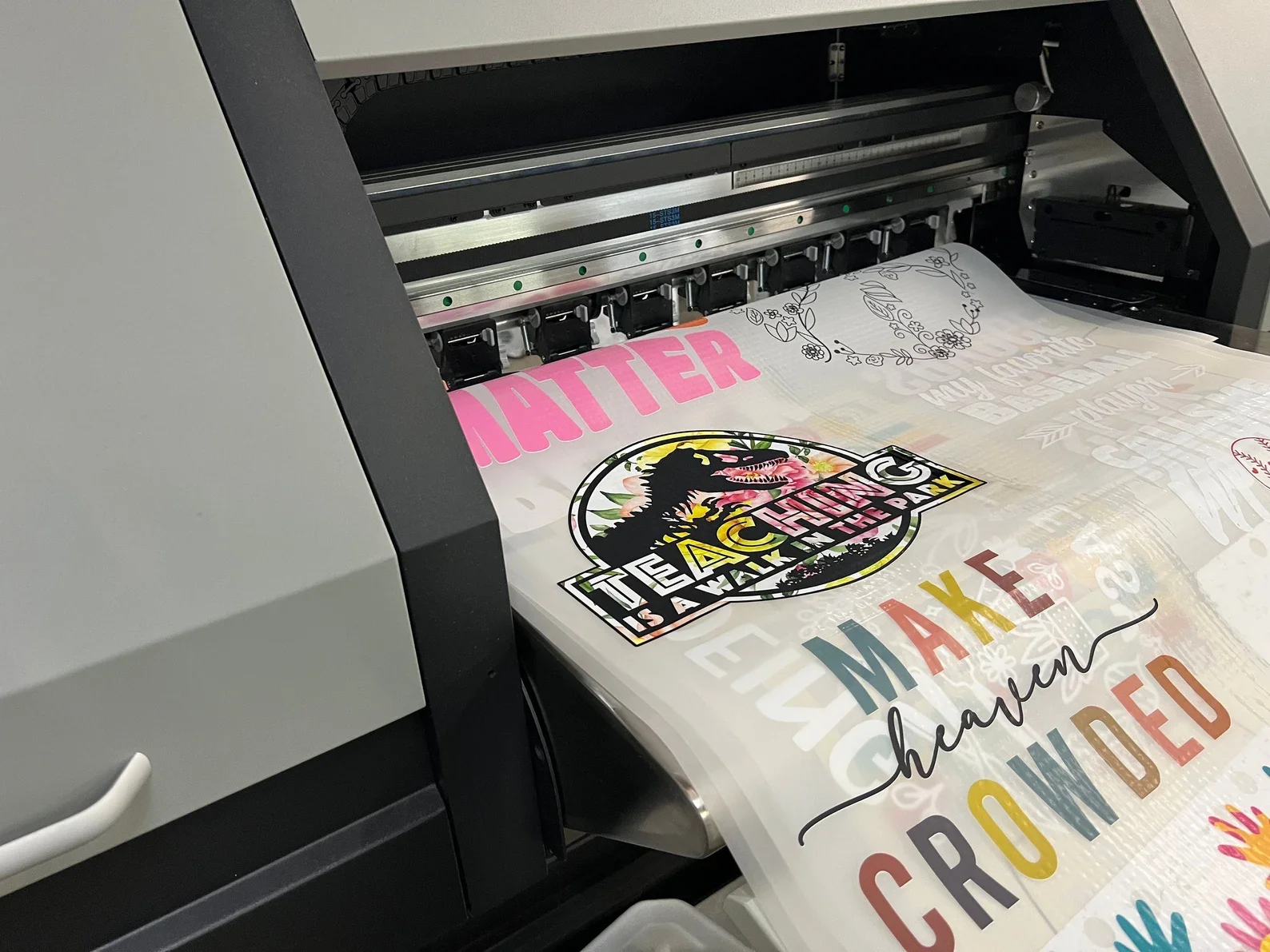
As DTF production volume increases, maintaining repeatability across continuous runs becomes more difficult without stable workflow control.
DTF printing systems are capable of producing highly consistent results under controlled conditions.
However, as production volume increases, maintaining consistent transfer quality becomes significantly more difficult.
Many DTF printing problems only begin appearing during continuous production, where curing stability, environmental conditions, material behaviour, and workflow pressure start affecting repeatability across the process.
In high-volume DTF environments, inconsistency is rarely caused by a single issue.
More often, variability develops when small process variations accumulate across multiple stages of production.
Why DTF Printing Becomes Harder to Control at Scale
As DTF production volume increases, the production environment becomes more demanding.
Higher throughput places greater pressure on:
curing consistency
material handling
temperature stability
workflow coordination
At lower production volumes, small inconsistencies may have limited impact.
Under continuous production conditions, however, those same variations can begin affecting:
transfer adhesion
print consistency
repeatability between jobs
This is where many DTF production environments begin experiencing instability across output quality.
How Environmental Conditions Affect DTF Printing Consistency
Environmental conditions play a significant role in DTF transfer consistency, particularly during high-volume production.
Changes in:
humidity
temperature
airflow
can influence how:
adhesive powder behaves
transfer films respond to heat
curing systems perform over time
Because DTF printing relies on controlled interaction between materials and heat, even small environmental fluctuations can affect transfer quality across larger production runs.
Under continuous operating conditions, these variations become increasingly noticeable across adhesion performance and print repeatability.
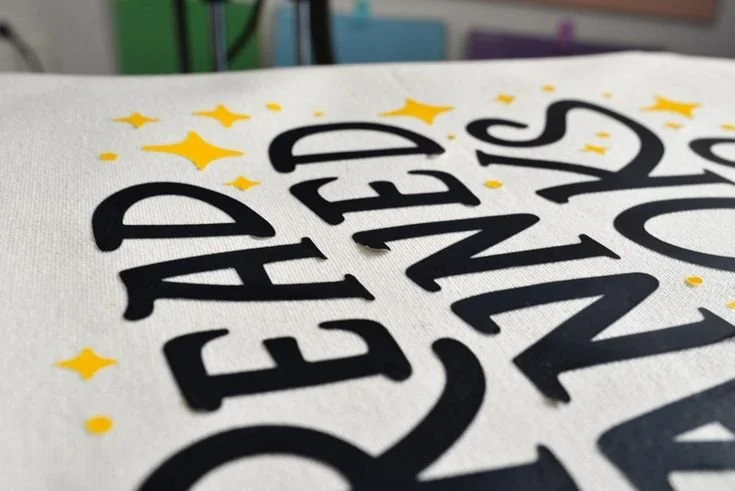
Consistent DTF results depend on how effectively materials, curing conditions, and workflow processes are controlled across production.
How the DTF Curing Process Affects Production Consistency
The DTF curing process is one of the stages most affected during continuous production.
As throughput increases:
curing systems operate for longer periods
heat consistency becomes more difficult to maintain
exposure variations become more noticeable across runs
This can lead to:
uneven adhesive activation
inconsistent transfer performance
variability between production batches
While curing may appear stable during shorter runs, sustained production often exposes how sensitive the process becomes under changing operating conditions.
For a deeper understanding of how curing affects transfer performance, you can also read our guide on DTF curing and why it affects final results.
How DTF Materials Affect Transfer Consistency
Material compatibility becomes increasingly important as production scales.
Small differences between:
DTF films
adhesive powders
ink systems
may not immediately appear during lower-volume production.
However, across continuous runs, these differences can contribute to:
inconsistent finishes
varying adhesion strength
uneven transfer application
Stable DTF production depends not only on the quality of individual materials, but on how consistently those materials perform together across the workflow.
You can also explore our guide on how DTF ink, film, and powder work together to better understand how materials interact throughout production.
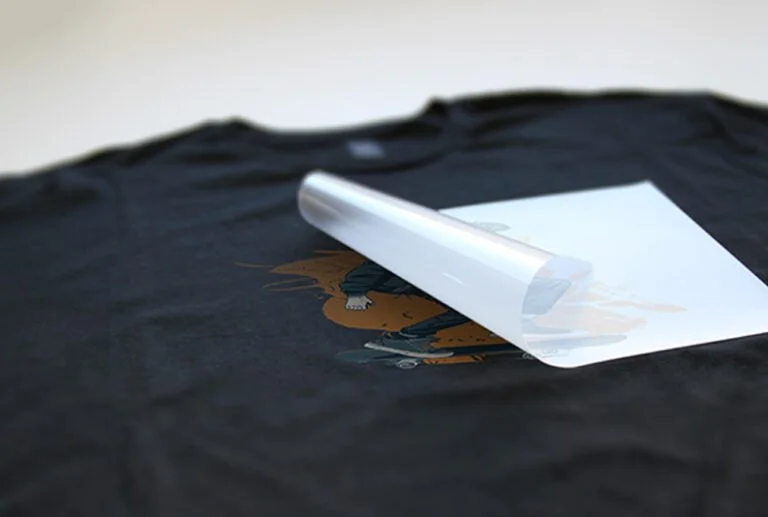
Material consistency becomes increasingly important during continuous DTF production, where film, adhesive, and ink performance must remain stable across runs.
How Workflow Pressure Creates Inconsistent DTF Results
As production volume increases, workflow pressure becomes more visible across the process.
This may include:
rushed handling between stages
inconsistent application timing
reduced process control during peak production periods
When workflows are not structured to support continuous production, variability increases across the system.
In many cases, inconsistent DTF printing results develop not because one stage fails, but because the workflow becomes more difficult to stabilise under sustained demand.
This is why production consistency is increasingly determined not only by equipment capability, but by how effectively the entire workflow is controlled.
Similar production challenges can also develop when workflow gaps reduce visibility and coordination between stages.
Why Repeatability Matters More Than Production Speed
Modern DTF production systems are capable of increasingly high output speeds.
However, scaling successfully is not simply about increasing throughput.
It is about maintaining repeatability while operating conditions become more demanding.
Stable DTF production environments prioritise:
controlled curing conditions
consistent material behaviour
structured workflows
repeatable handling procedures
Without these controls, increasing production speed can amplify inconsistency rather than improve operational efficiency.
In many production environments, repeatability becomes a more valuable indicator of performance than output speed alone.
Conclusion
DTF printing production becomes increasingly complex as output volume grows.
What appears stable during smaller production runs can become more inconsistent under continuous operating conditions.
Even with advanced DTF equipment, maintaining consistent transfer quality depends on how effectively curing stability, material behaviour, environmental conditions, and workflow processes are controlled together.
By reducing variability across the production workflow, businesses can improve repeatability while scaling output more effectively.
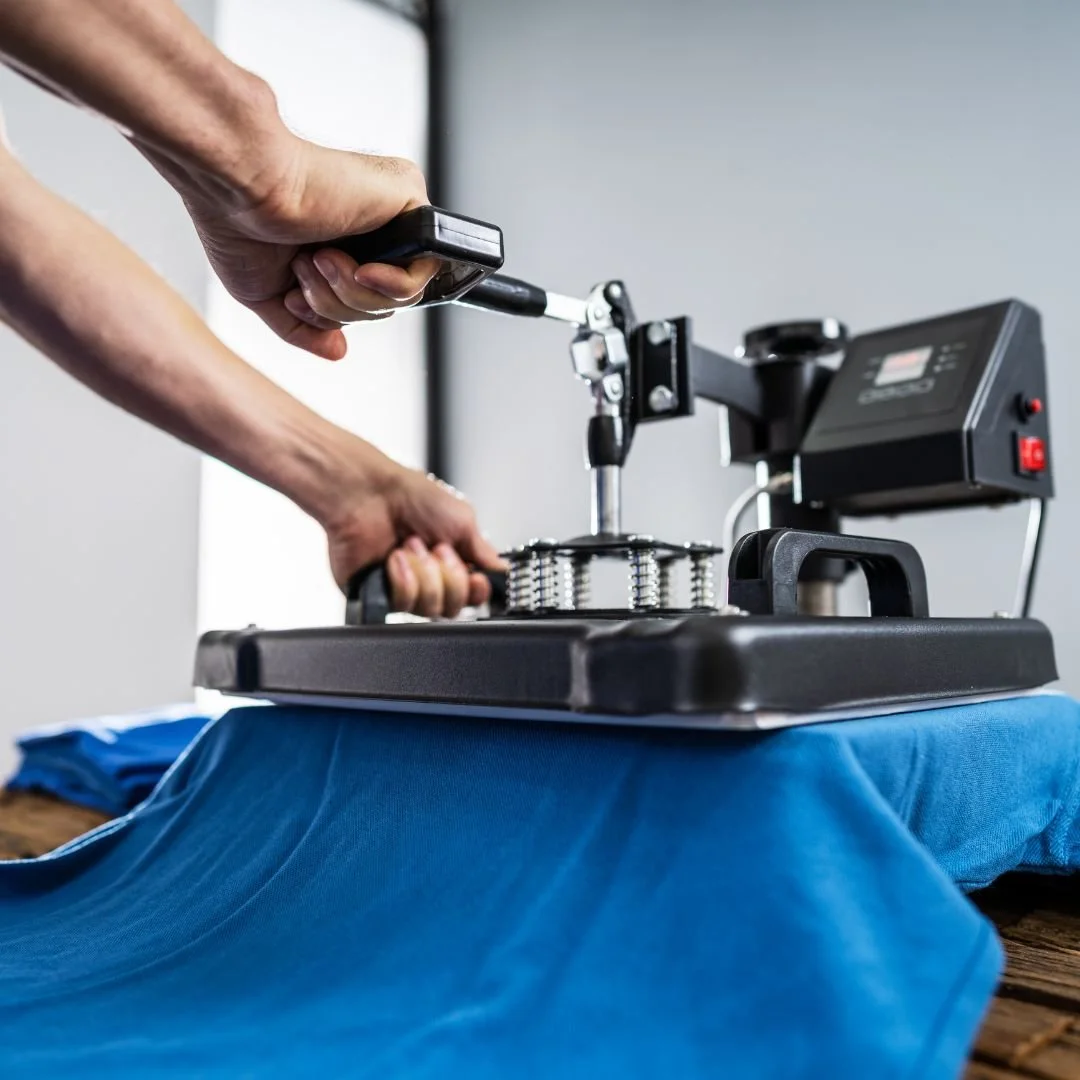
Consistent DTF production depends on controlled processes, stable operating conditions, and repeatable workflow execution across every stage.
At Kissel+Wolf, we support print production environments with solutions designed to improve workflow coordination and production consistency.
For a deeper look at how structured workflows reduce manual bottlenecks, read our guide on how optimising prepress workflow improves print production.
Get the Right Workflow for Your Production
If you're reviewing your DTF setup, it may be worth assessing how curing stability, environmental conditions, material compatibility, and workflow coordination affect repeatability across production.
Understanding where gaps exist is the first step towards improving efficiency and consistency.
Contact us to discuss your DTF production workflow.