Optimising Prepress Workflow: Reducing Manual Bottlenecks in Print Production

Managing job preparation and production workflows is a critical step in modern print environments.
In many print businesses, productivity improvements are often associated with faster presses, higher output speeds, or automated finishing systems. While these developments are important, many operational inefficiencies begin much earlier in the production process.
Prepress and job preparation determine how smoothly a job moves from artwork submission to final output. When preparation relies on manual adjustments, inconsistent file handling, or fragmented processes, small delays can quickly accumulate across multiple jobs.
Over time, these inefficiencies can affect turnaround times, print accuracy, and overall production reliability.
Reliable print production does not begin on the press.
It begins with controlled preparation.
By strengthening preparation processes, print businesses can reduce manual bottlenecks and create more stable and predictable production environments.
Where Prepress Bottlenecks Occur

Reviewing artwork, colour settings, and file formats is a critical part of the prepress workflow.
Prepress acts as the bridge between customer artwork and production. Before a job reaches the press, files must be checked, adjusted, and prepared so they can move smoothly through the workflow.
Typical preparation tasks include:
artwork validation
colour profile adjustments
file conversion and formatting
imposition and layout preparation
preparing files for different production methods
These steps are common across many production environments, from traditional screen printing systems to modern digital printing solutions and garment transfer workflows.
When these tasks rely heavily on manual corrections, delays become more likely.
Artwork can arrive in a variety of formats, colour spaces, and resolutions. While individual adjustments may only take a few minutes, repeated corrections across multiple jobs can slow production significantly.
For businesses operating across multiple technologies, accurate preparation becomes essential for maintaining consistent output.
The Impact on Production Efficiency
Modern print businesses operate in increasingly complex production environments. Shorter run lengths, greater levels of product customisation, and faster turnaround expectations mean production teams must manage more jobs within tighter schedules.
When prepress preparation is inconsistent, production teams often need to correct issues during printing. This can lead to longer setup times, wasted materials, and interruptions on press.
When files are not prepared correctly upstream, production teams often end up solving problems that should have been addressed earlier in the workflow.
In some cases, preparation issues can also affect upstream environments such as the screen room process, where stencil preparation, coating, and imaging must be completed accurately to support reliable printing.
Building Structured Prepress Workflows
Reducing manual bottlenecks begins with establishing structured and repeatable preparation processes.
Standardised File Preparation
Clear artwork guidelines can significantly reduce inconsistencies in incoming files. By standardising file formats, resolution requirements, and colour profiles, print businesses can ensure artwork arrives closer to production-ready conditions.
This reduces the need for repeated adjustments and allows prepress teams to focus on validation rather than extensive corrections.
Workflow Automation
Automation tools can help streamline repetitive tasks such as file validation, colour management, and job setup.
Automated preflight systems can identify common issues — including missing fonts, incorrect colour spaces, or low image resolution — before files reach production.
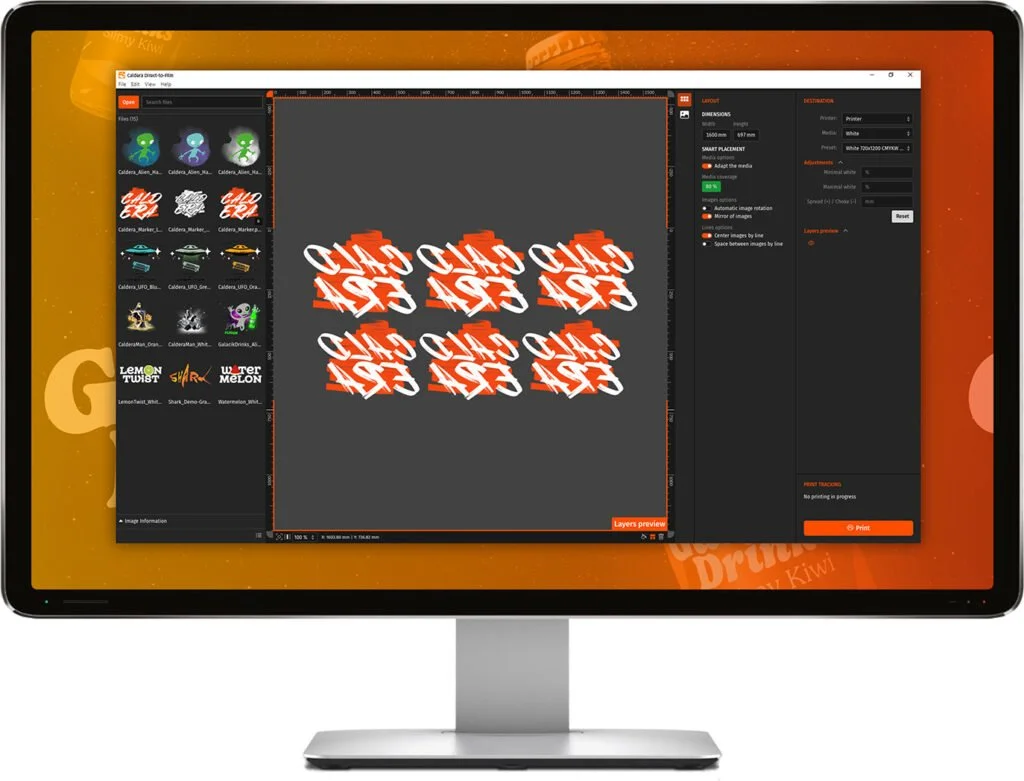
Many print businesses also implement workflow systems such as Caldera, which help manage file preparation, colour control, and job automation across digital print and growing DTF production environments.
Integrated Production Systems
Modern print environments increasingly rely on integrated production workflows that connect prepress preparation with printing, finishing, and scheduling systems.
When job data flows seamlessly between systems, operators spend less time manually transferring information or rebuilding job settings across different devices.
Integrated workflows allow production teams to focus on printing — not troubleshooting.
For businesses operating hybrid production environments that combine screen printing, digital printing, and wide-format technologies, integrated workflows help maintain consistency and reduce setup complexity.
Improving Consistency and Reducing Rework

Structured preparation workflows help production teams reduce setup issues, maintain print consistency, and minimise rework during production.
One of the key benefits of optimised prepress workflows is the reduction of rework. When jobs are properly prepared before entering production, the likelihood of on-press corrections decreases.
Files move through the workflow more smoothly, improving both production speed and print reliability.
For many print businesses, reviewing workflow processes and implementing structured preparation methods can significantly improve overall production performance.
Preparing for More Efficient Production
As print technologies continue to evolve, workflow reliability is becoming just as important as machine performance.
Automation, system integration, and improved process control are helping print businesses reduce manual bottlenecks and maintain consistent output across increasingly complex production environments.
By strengthening prepress and job preparation processes, businesses can improve turnaround times, reduce production interruptions, and create more stable production workflows.
At Kissel+Wolf, we support Australian printers with complete solutions across screen printing, digital print, and production workflow software.
Visit the Kissel+Wolf website to learn more, or contact our team using the form below to explore solutions that support your production workflow.