
Screen · Imaging
CTS & Screen Imaging Solutions
Film-free screen imaging for sharper detail, faster setup and consistent quality.
Advanced Computer-to-Screen (CTS) and Laser-to-Screen systems that image your artwork directly onto the screen — eliminating film, cutting setup time and improving repeatability across every run.
Why go film-free
Imaging directly onto the screen removes the film step entirely — saving cost and time while lifting quality. Here's what that means day to day.
No film, no film costs
Image straight to the screen — no film output, storage or waste, and less retouching.
Sharper detail & registration
Direct imaging holds fine detail and halftones with tighter, more repeatable registration.
Faster setup
Shorter set-up times and higher throughput — some systems image a screen in under a minute.
Consistent, repeatable
Every screen images the same way, run after run, reducing rejects and remakes.
How screen imaging works
01
Design
Prepare your artwork and separations digitally — no film output required.
02
Image
The system images your design directly onto the coated screen by inkjet or laser.
03
Expose
Expose the screen (many systems include or offer an integrated LED/UV exposure unit).
04
Wash out and print — with sharper detail and faster, repeatable setup.
Two ways to image, film-free
Screen imaging comes in two technologies. Start with the one that suits your detail, volume and budget — then use the scale filter to narrow to the right size.
Imaging systems
Filter by the scale of your operation, then explore the laser and Computer-to-Screen ranges below. Every system is supplied with installation, training and support.
Laser Imaging
The KIWO LX range images screens by laser for extremely crisp, consistent edges — a clean, film-free workflow from entry to large-format production.
4 systems
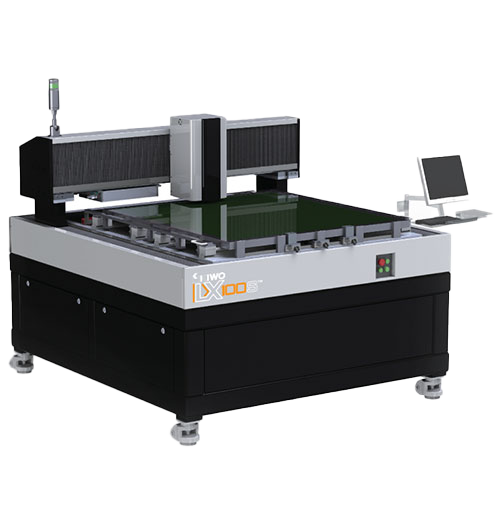
KIWO LX100S
A compact laser-to-screen system for sharp, film-free imaging on small to mid-size screens — a strong entry point into laser imaging.
Max screen
900 × 1100 mm
Min screen
400 × 400 mm
Max exposure
850 × 950 mm
Frame thickness
25–45 mm
Resolution
1270 dpi (2540 optional)
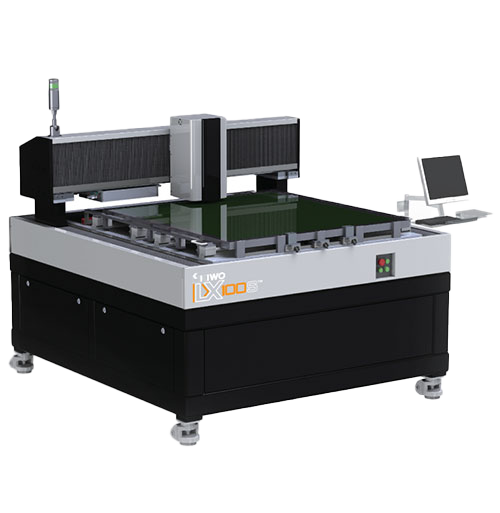
KIWO LX100L
A larger-format laser imaging system for bigger screens, keeping the same sharp resolution and film-free workflow.
Max screen
1200 × 1300 mm
Min screen
400 × 400 mm
Max exposure
1100 × 1250 mm
Frame thickness
25–45 mm
Resolution
1270 dpi (2540 optional)
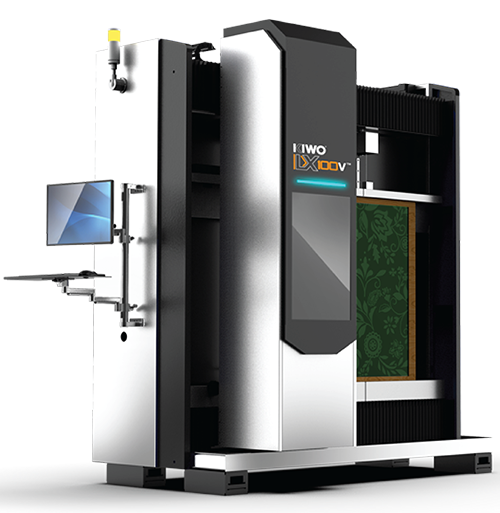
KIWO LX100V
A versatile laser imaging system for thinner frames and mid-size screens, with optional high-resolution output.
Max screen
900 × 1000 mm
Min screen
400 × 400 mm
Max exposure
850 × 950 mm
Frame thickness
20–40 mm
Resolution
1270 dpi (2540 optional)
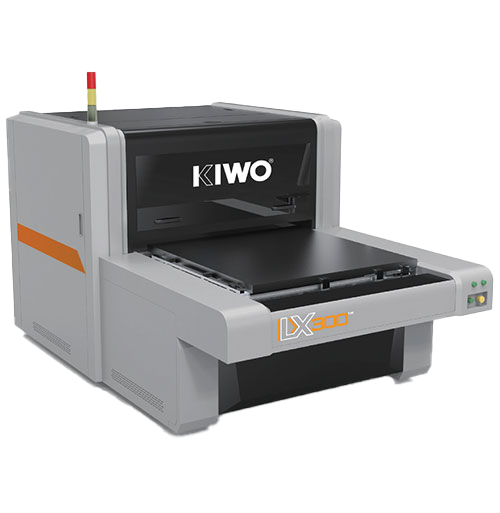
KIWO LX300
A large-format laser imaging system for high-volume and oversized screen production, without film.
Max screen
1200 × 1800 mm
Min screen
400 × 400 mm
Max exposure
1100 × 1250 mm
Frame thickness
25–45 mm
Resolution
1270 dpi (2540 optional)
Computer-to-Screen (CTS)
Inkjet CtS from KIWO and the Grünig StencilMaster family — from the compact STM-One through to fully automated in-line systems that scale with your production.
9 systems
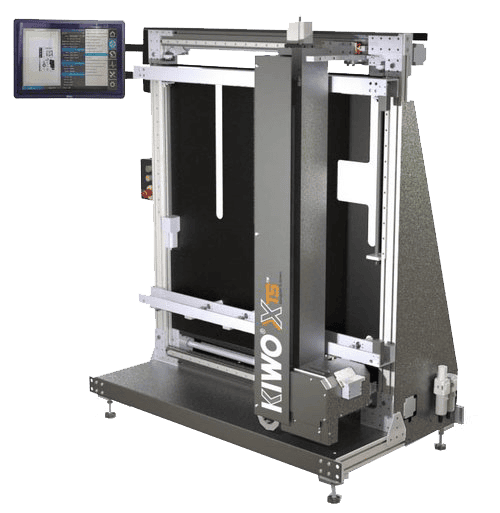
KIWO XTS
An inkjet Computer-to-Screen system with a fast, film-free workflow — averaging under a minute per screen. A touch-screen interface and optional LED exposure unit make it an efficient all-rounder.
Printhead
Single Xerox inkjet
Resolution
Up to 1500 dpi
Speed
< 1 min / screen (avg)
Max image
89 × 86 cm
Max frame
107 × 107 cm O.D.
Options
LED exposure unit
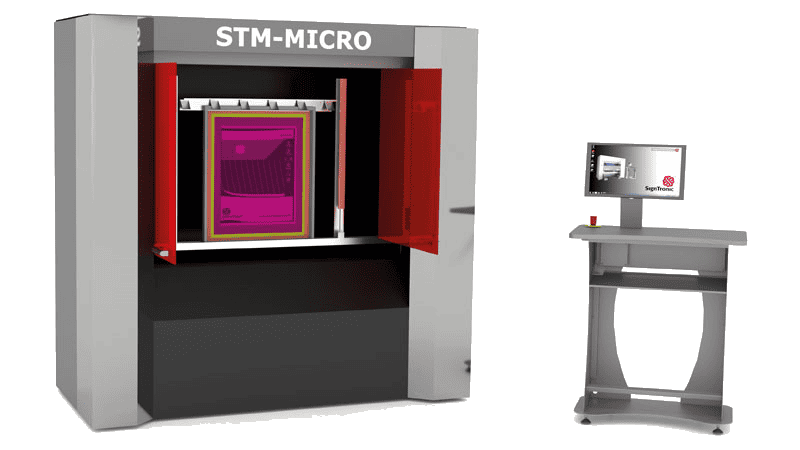
Grünig STM-Micro
A modular Generation 4 StencilMaster with a high-quality exposure head, offering guaranteed resolution up to 3040 dpi and reliable exposure across virtually all meshes and emulsions.
Max screen
880×880 / 1200×900 / 1350×950 mm
Max exposure
700×700 / 1050×700 / 1150×700 mm
Resolution
1270 / 2400 / 3040 dpi
Light source
CPL 330 W UV or UV LED DUO
Concept
Modular Gen 4 CtS
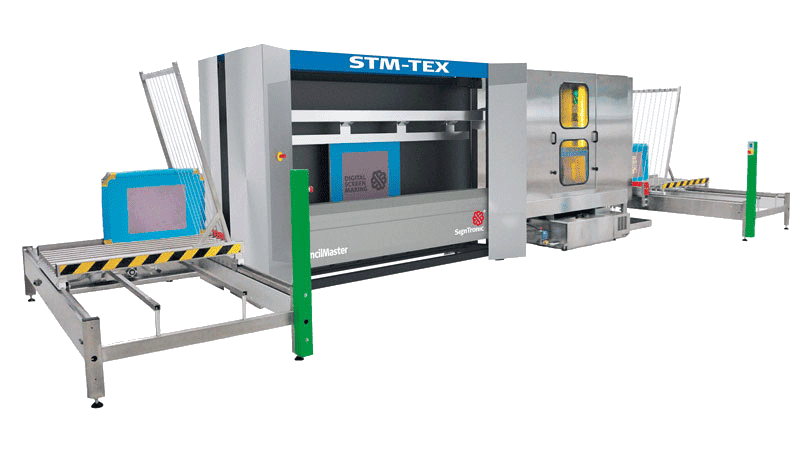
Grünig STM-Tex Series
A modular Generation 4 CtS built for textile production, with fast exposure speeds up to 650 mm/sec across a range of screen sizes.
Max screen
1200×1250 / 1200×1600 / 1500×2000 mm
Max exposure
1050×1000 / 1050×1600 / 1350×1600 mm
Exposure speed
Up to 650 mm/sec
Resolution
1270 dpi
Light source
CPL 330 W UV or UV LED DUO
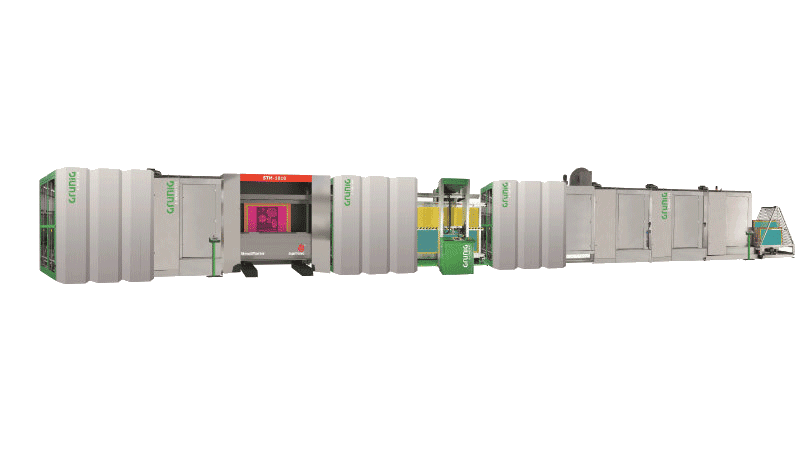
Grünig STM In-Line
Fully automated CtS in-line concepts — loading/unloading stations, upstream coating, blow-off and dryer modules — for the lowest cost per screen and the highest production output. Designed for modular extension with SignTronic StencilMaster.
Configuration
Modular in-line, various sizes
Loading
Feeder magazine, 10 positions
Modules
Coating, blow-off, drying
Base units
STM-Tex Basic One / Pro 10
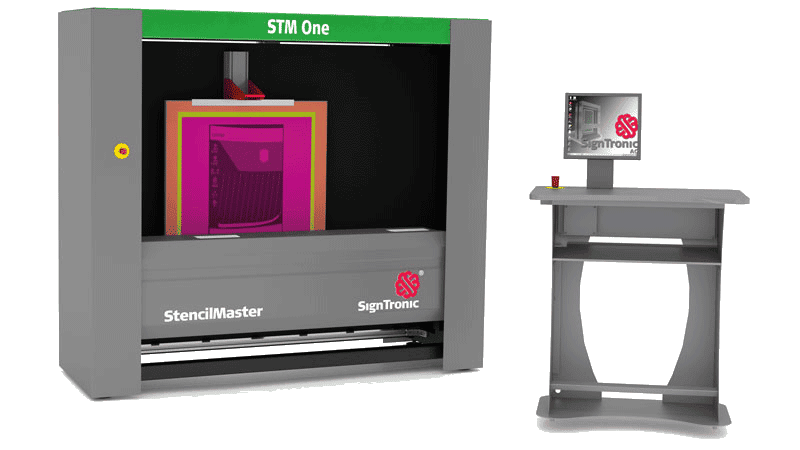
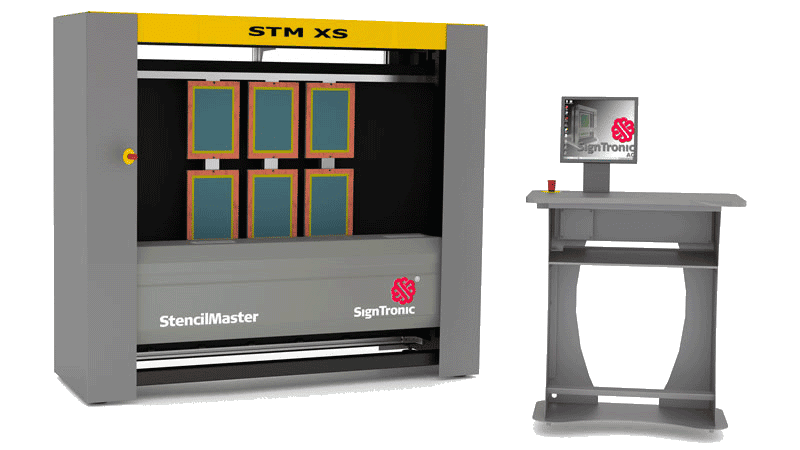
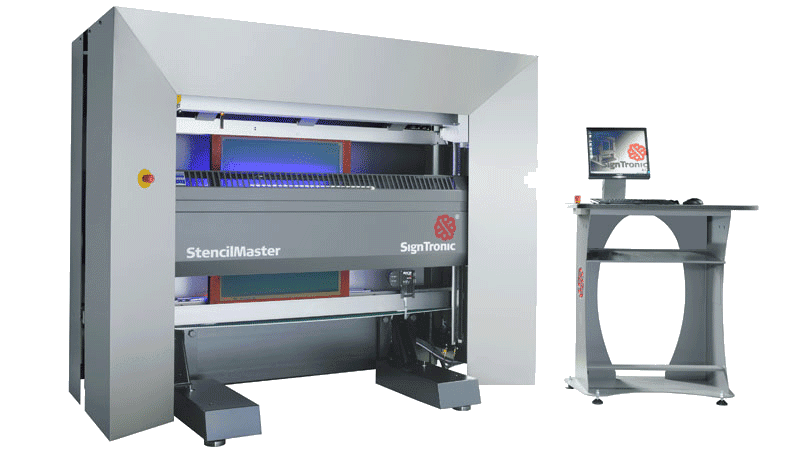
Grünig STM-HR Series
High-Production Computer-to-Screen
Max screen: 150×150 up to 2200×2800 mm · Resolution: 2400 / 3040 dpi
Grünig STM-XL Series
Large-Size-Format Computer-to-Screen
Max screen (landscape): Up to 2800 × 7300 mm · Max screen (portrait): Up to 12 × 4.6 m
Not sure which imaging system fits?
Tell us your screen sizes, detail requirements and volumes, and we'll recommend the right laser or CTS configuration — with the exposure and coating gear to match.
Screen imaging questions
Laser vs CTS, resolution, exposure and choosing for your volume.
What is film-free screen imaging?
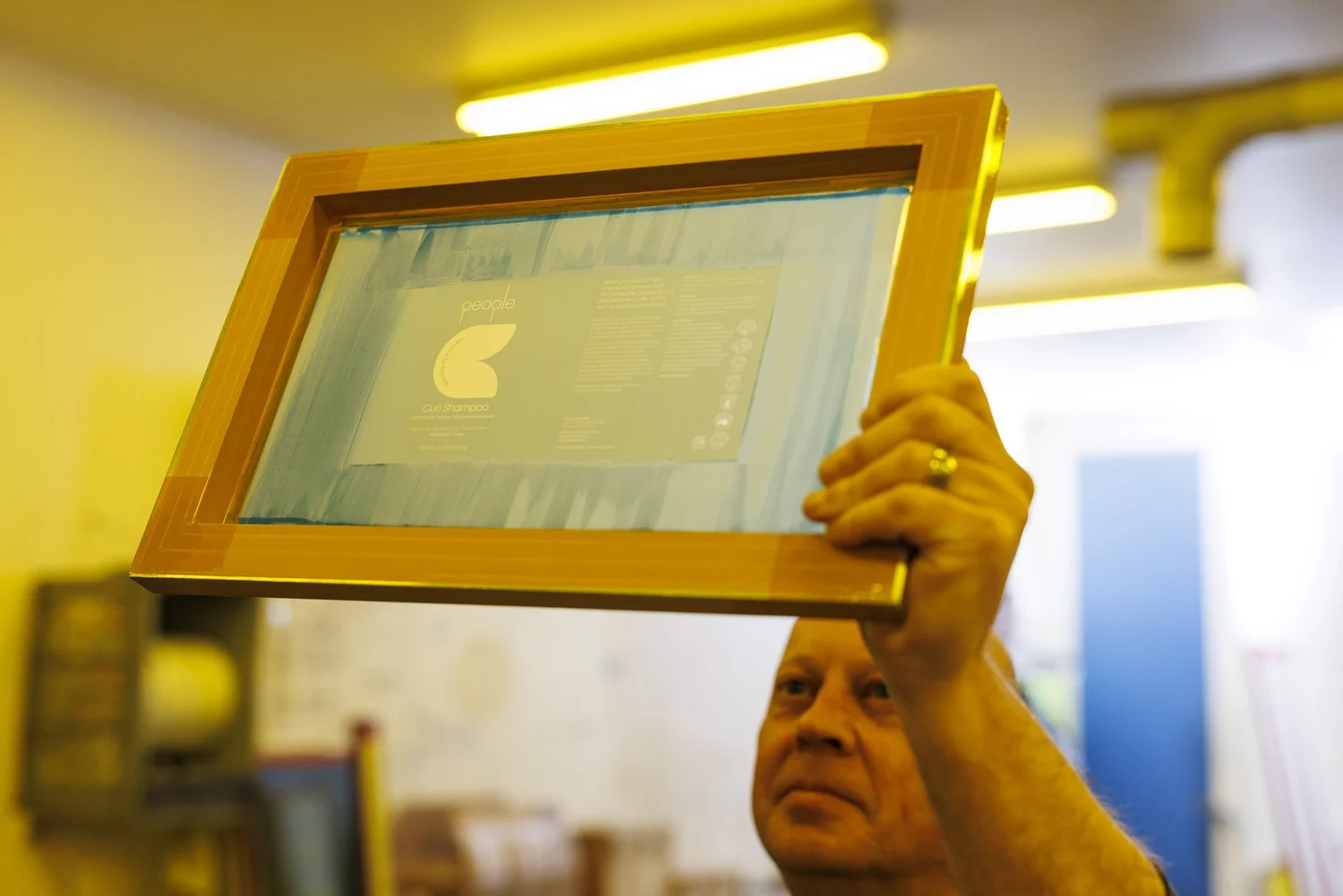
Instead of printing your artwork onto film and exposing it against the screen, a Computer-to-Screen (CTS) or Laser-to-Screen system images the design directly onto the coated screen. That removes film cost, storage and a whole error-prone step — giving sharper detail and faster, more repeatable setup.
Laser imaging or Computer-to-Screen (CTS) — what is the difference?
Laser systems (the KIWO LX range) ablate the stencil with a laser for extremely crisp, consistent edges. Inkjet CTS systems (KIWO XTS and the Grünig StencilMaster range) jet an opaque image onto the coated screen, then expose it. Both are film-free; the right choice depends on your detail requirements, volume, screen sizes and budget — we can help you compare.
What resolution do I need — 1270, 2400 or 3040 dpi?
1270 dpi suits most general and textile work. Step up to 2400 or 3040 dpi for fine halftones, high line counts and demanding graphic detail. Several systems offer these as options, so you can match resolution to the work you actually print.
Do I still need an exposure unit?
Yes — imaging and exposure are separate steps. Many of these systems include or offer an integrated LED/UV exposure unit (CPL 330 W UV lamp or UV LED DUO), and we also supply standalone exposure equipment. We will spec the right combination for your workflow.
Which system suits my volume and screen sizes?
Use the scale filter above — Entry, Production or Large-format — to narrow the range, then compare. From the compact STM-One through to fully automated in-line systems, there is a configuration for most operations. Tell us your screen sizes and volumes and we will recommend one.
Do you install and support these systems?
Yes. We provide installation, operator training and ongoing technical support across Australia and New Zealand, so your imaging system is production-ready and stays that way.
Talk to a screen imaging specialist
Whether you're moving off film for the first time or scaling to an automated in-line system, our team can help you choose the right laser or CTS solution — with installation, training and support across Australia and New Zealand.
Machine specifications, resolutions and formats are indicative and current as at the time of publishing — contact us for current pricing, configurations, availability and lead times. Actual performance depends on screen, mesh, emulsion and workflow; a site consultation is recommended to confirm the right system for your operation.