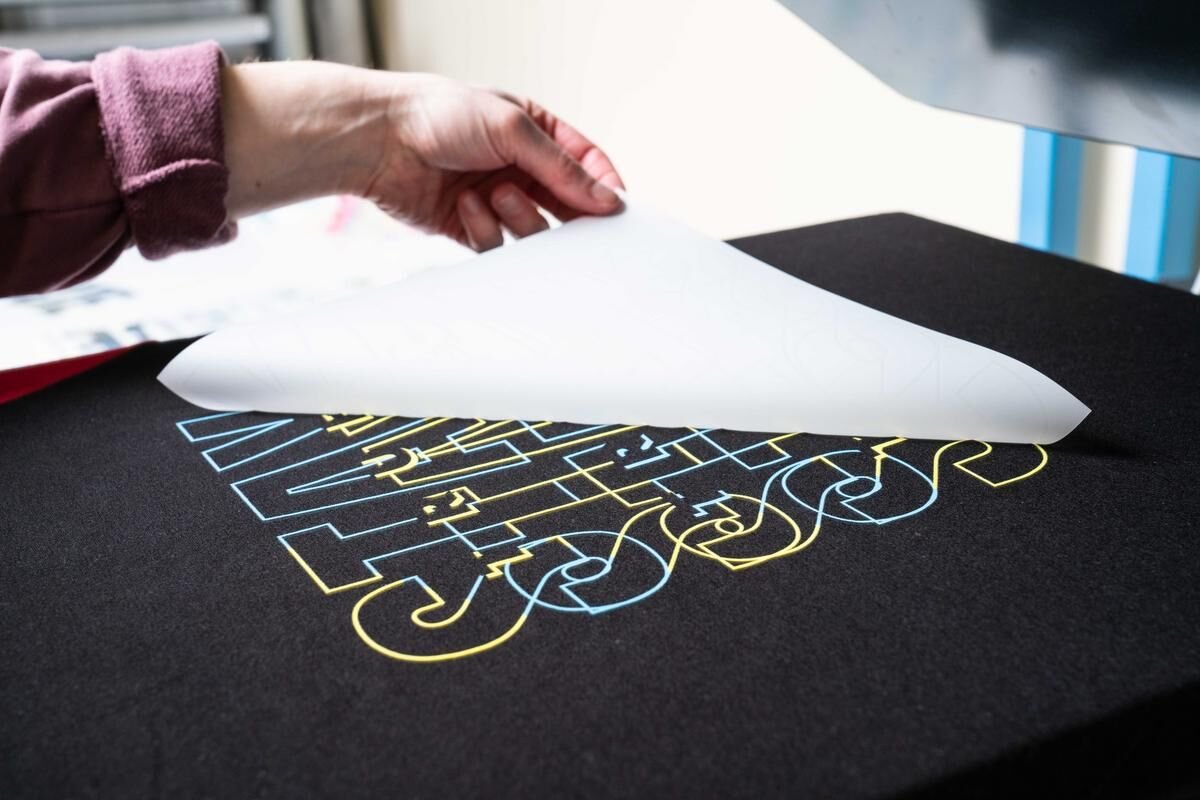
Final DTF results are shaped by how each stage — particularly curing — is controlled before application.
DTF printing is often described as a sequence of stages in modern textile production — printing, powder application, curing, and heat transfer.
Among these, curing is one of the least visible, but most critical stages in the process.
It is where the adhesive layer is formed, preparing the transfer for final application.
However, curing does not complete the process.
It determines how the transfer will perform during application.
What Is DTF Curing?
DTF curing is the stage where adhesive powder is melted and bonded to the printed ink layer.
During this process:
heat is applied to the transfer
the adhesive powder transitions from a dry state to a cohesive layer
the design becomes stable enough for handling and pressing
At this point, the transfer may appear finished.
However, the transfer is only partially complete at this stage.
What Happens During the Curing Process
Curing involves more than simply applying heat.
It is a controlled transformation of the adhesive layer.
Key changes include:
powder melting and flowing into the ink layer
formation of a flexible bonding surface
stabilisation of the printed design
The result is a transfer that can be handled without damage and prepared for heat application.
This behaviour depends on how the materials interact across the process, particularly how DTF ink, film, and powder work together.
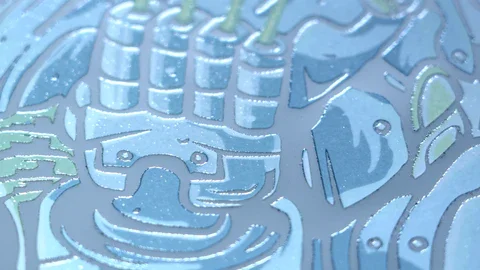
During curing, adhesive powder melts and forms a cohesive layer that prepares the transfer for final application.
Why Curing Quality Matters
The quality of curing directly affects how the transfer behaves during pressing.
If curing is inconsistent, issues may appear later in the process.
These can include:
weak or incomplete adhesion
uneven bonding across the design
reduced durability after application
Even when printing is consistent, poor curing can limit final results.
Why Curing Issues Repeat Across Production
Curing problems often persist because they are influenced by earlier stages of the process.
For example:
uneven powder application affects curing consistency
material compatibility affects adhesive behaviour
workflow variability affects temperature control
Because of this, curing should be considered part of a connected system, not an isolated step.
Common DTF Curing Problems
Curing issues are not always visible at first.
They often become apparent during the heat press stage or after application.
Under-Curing
adhesive remains partially unmelted
bonding strength is reduced
transfers may peel or lift
Over-Curing
adhesive becomes too rigid
bonding may be inconsistent
finished prints may crack or feel brittle
Uneven Curing
heat distribution is inconsistent
different areas of the transfer behave differently
results vary across the same print
What Needs to Be Controlled During Curing
Consistent curing depends on maintaining stable conditions.
Key variables include:
temperature
exposure time
heat distribution
These factors must remain consistent across each transfer.
Small variations at this stage can affect the outcome of the entire process.
How Curing Affects the Heat Press Stage
Curing prepares the adhesive, but the heat press activates it.
If curing is not properly controlled:
the adhesive may not activate evenly
bonding may be incomplete
final output may vary across jobs
Because of this, curing should be viewed as a preparation stage that directly influences the success of application.
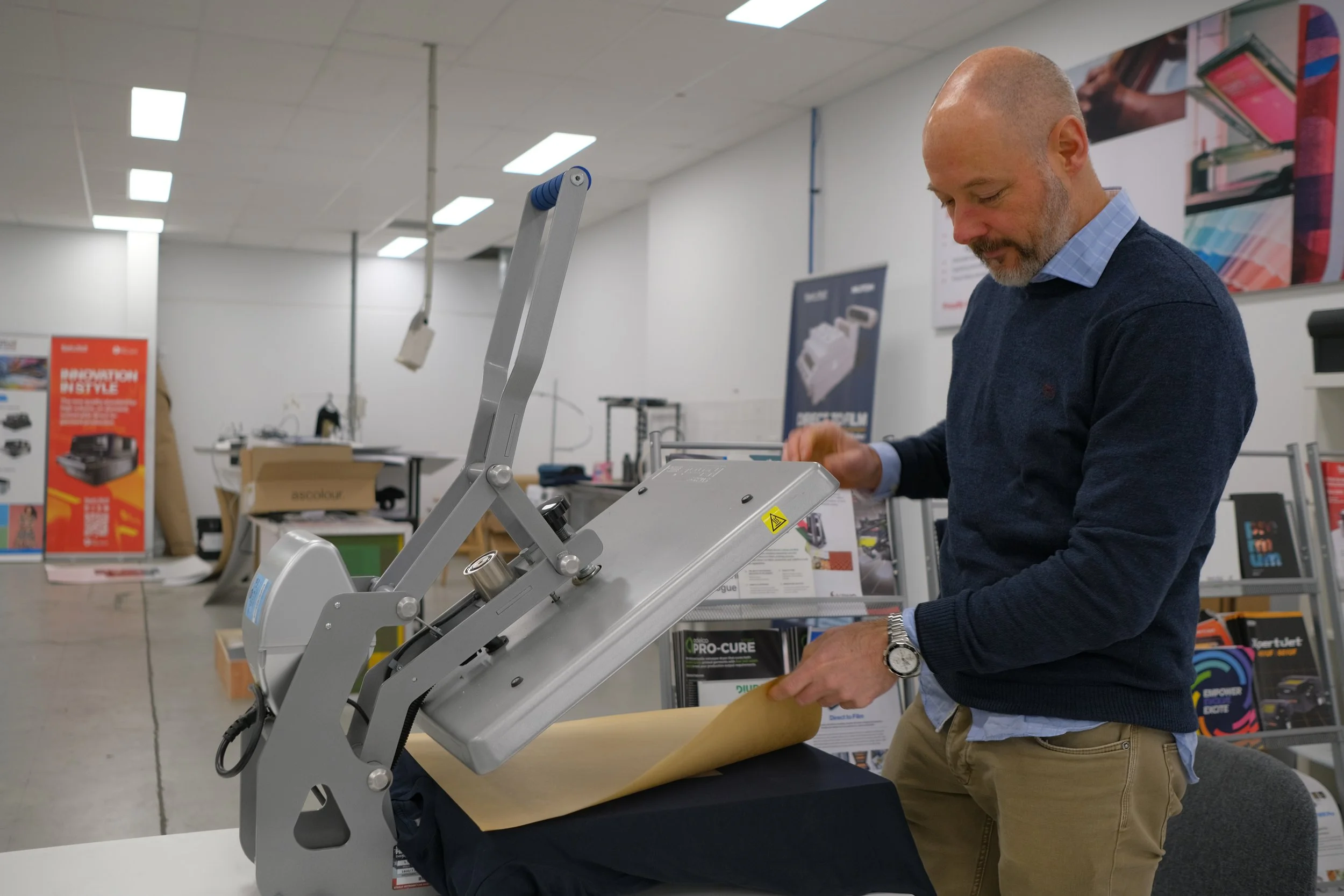
The heat press activates the adhesive layer, determining how effectively the transfer bonds to the substrate.
How to Improve Curing Consistency
Improving curing results is less about reacting to problems and more about controlling variability.
This includes:
applying powder evenly across the transfer
maintaining stable curing temperatures
ensuring consistent exposure time
using compatible ink, film, and powder systems
A structured approach helps ensure that curing produces predictable results.
As production scales, consistency often depends on how stages are coordinated across the workflow.
Conclusion
DTF curing is a critical stage that shapes how transfers perform during application.
While it may appear to be a simple step, it determines how effectively the adhesive layer forms and prepares for bonding.
By focusing on control and consistency during curing, production environments can improve reliability across the entire process.
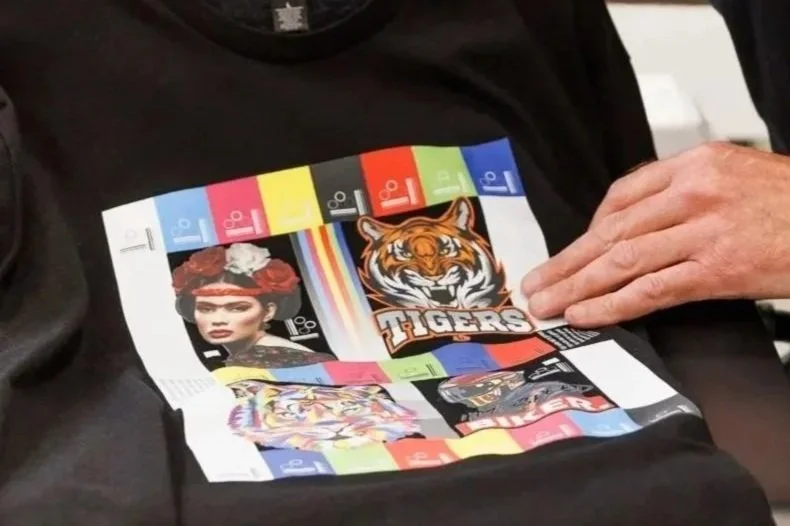
Final output quality reflects how well each stage — from curing through to application — is controlled.
At Kissel+Wolf, we supply DTF ink systems, films, and adhesive powders designed to work together across modern textile production environments.
For a deeper understanding of how materials interact across the process, you can also read our guide on how DTF ink, film, and powder work together.
Get the Right DTF Workflow for Your Production
If you're setting up DTF production, it may be worth reviewing how each stage — particularly heat transfer — is controlled and standardised across your workflow.
Contact us to discuss your DTF workflow