When to Screen Print and When to Run DTF: A Practical Guide for Promo Shops
Fifty Shirts, One Design, Due Friday
A promo shop gets the call: fifty shirts, one design, five colours, needs to ship by Friday. On a screen press, that's five screens to burn, five inks to mix, and a full registration and setup pass, all for fifty units. By the time the press is actually running, the job has already eaten most of its margin.
Say yes anyway, and the job barely breaks even. Say no, and it's not just this order walking away. It's the five-hundred-unit reorder the same client might have placed next quarter, once they trust you with the small stuff first.
This is the exact spot where a lot of promo shops lose money without ever figuring out why. It's not that screen printing is the wrong skill. It's the wrong tool for this particular run length, which is usually where Direct-to-Film printing earns its place on the floor.
Why Screen Printing Struggles Below a Certain Volume
Screen printing earns its cost efficiency at volume. The fixed costs (burning screens, mixing and matching ink, registering colours, cleaning up afterwards) amortise across the run, a pattern well documented in industry breakdowns of screen printing setup economics. At a thousand units, that setup cost barely shows up per garment. At fifty, it can be the majority of what the job costs to produce.
This isn't a skill problem or an equipment problem. It's arithmetic. Screen printing was built to make sense at scale, and short runs sit outside the range where that scale advantage kicks in.
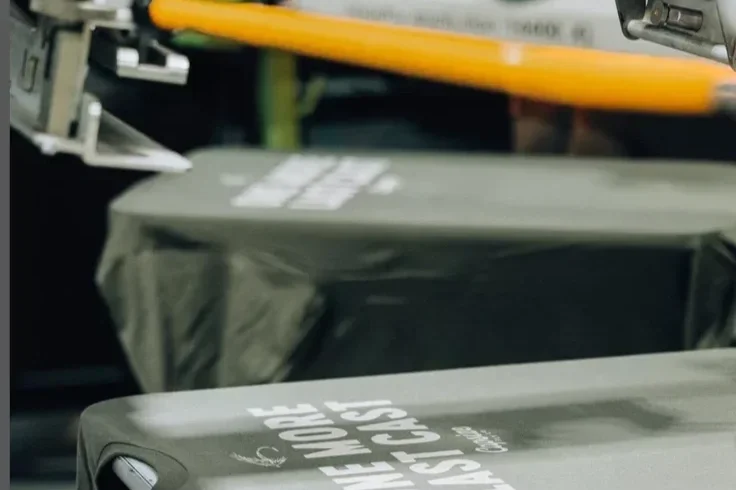
A screen press mid-run, the setup and labour behind every job that only pays off at volume.
What It Actually Costs to Get This Wrong
Shops that take short runs onto the screen press anyway tend to do one of two things: quietly eat the margin, or quote high enough to cover it and lose the job to a competitor who didn't. Both outcomes cost future business. A client who gets priced out of a fifty-unit order rarely comes back with the five-hundred-unit one either.
The alternative, turning the job away outright, has the same effect from a different direction. Either way, the shop's own production limitations end up deciding what work it's allowed to want.
Where Direct-to-Film Actually Fits
DTF removes the setup cost that makes short runs expensive in the first place. There's no screen to burn, no per-colour registration, and no minimum run size that has to be hit before the job starts paying for itself. A design goes straight from file to full-colour print on transfer film, then transfers with heat using adhesive powder, giving the same finished result a client expects without the fixed cost that only makes sense at volume.
This isn't a replacement for the press sitting next to it. It's what runs when that press isn't the right tool for the job in front of it.
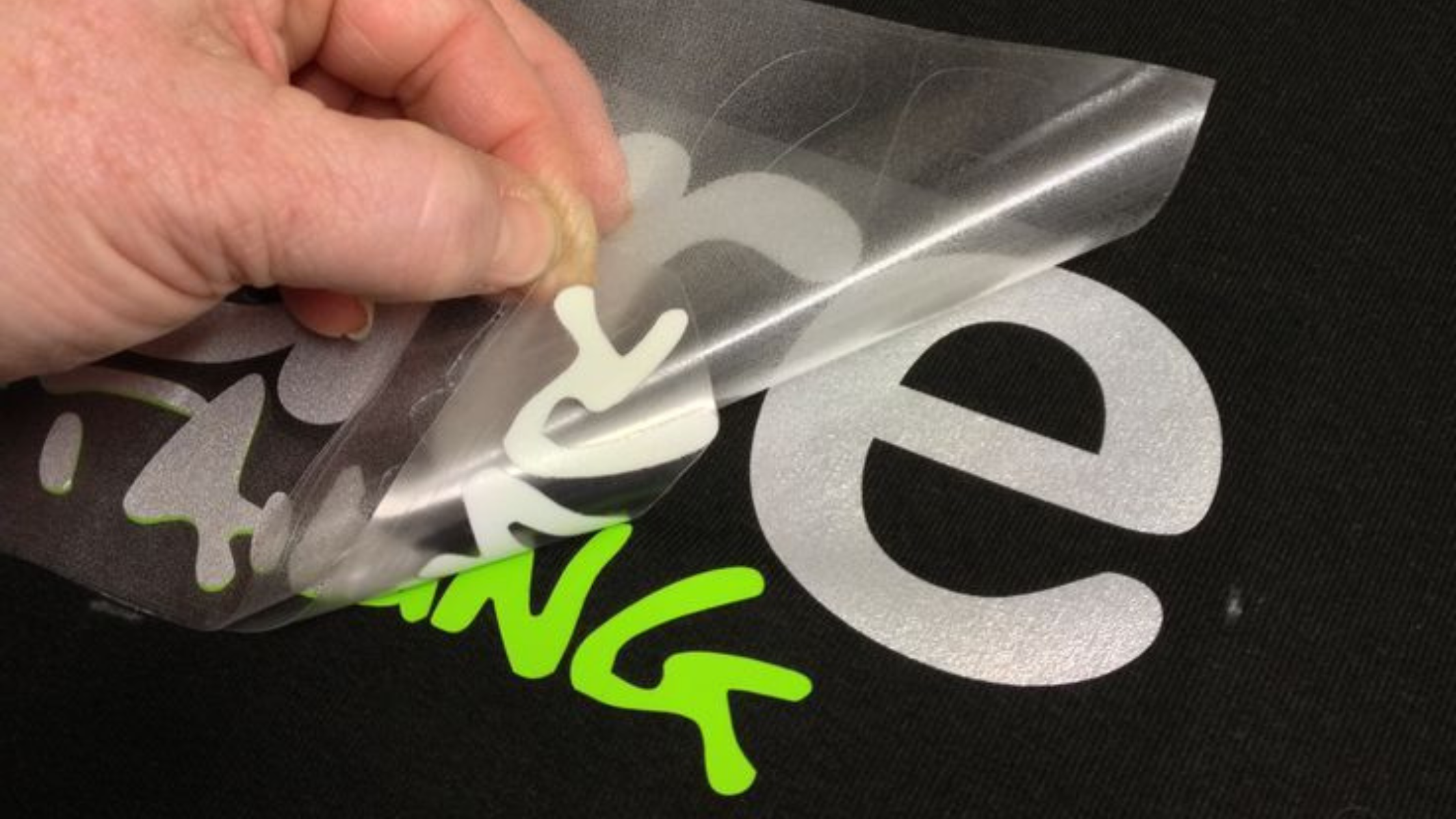
A DTF transfer peeling straight onto fabric, no screen or per-colour setup involved, just the finished design going from film to garment.
The AGP Range: Matched to Where Your Volume Actually Sits
"Get a DTF printer" isn't a single decision. The right system depends on how much of this work you're actually planning to run.
AGP DTF-T652 / T653 / T654 are 60cm Direct-to-Film printers built for exactly this promo-shop scenario: garment decoration and textile transfer work that needs to scale without demanding a production floor to match.
Available with 2, 3 or 4 Epson I3200-A1 printheads, so the same series scales with your order volume rather than forcing a full re-buy later
Production speeds from 6 to 20 m²/h depending on configuration
CMYK + White or CMYK + Fluorescent ink configurations
Automatic white ink circulation and stirring: white ink settling is one of the most frequently cited causes of inconsistent DTF output, and this is built to prevent it
Runs on Caldera or FlexiPRINT RIP software
If short-run DTF work grows into consistent daily volume, the AGP DTF-T1600 is the same category at production scale: 1600mm wide, 5 or 6 printhead configurations, up to 38 m²/h in high-speed mode, with automatic media feeding and a three-stage heating system for stable curing. It's worth knowing this path exists before you outgrow the T652/653/654 series, not after.
The Printer Is Never the Whole Workflow
A DTF printer on its own doesn't guarantee a consistent transfer. The film, ink, powder application and curing all have to work together, and this is where a lot of shops hit inconsistent results they assume is a printer problem. Uncontrolled powder application and curing are two of the most common causes of transfers that look fine on film and fail on the garment.
The AGP H650L Pro Shaker handles the powder and curing stage specifically: automatic powder application, pre-heat, drying and rapid cooling in one pass, with adjustable speed and temperature control and an automatic tension take-up system, built for media up to 600mm wide. It's the step between "printed on film" and "ready to press," and it's usually the step that decides whether a transfer is repeatable at volume or not.
Brochure (AGP H650L Pro Shaker)
Full range: DTF inks, transfer films, adhesive powders
The crossover point is specific to your own numbers, not a rule of thumb. It depends on your ink cost per print, labour, and how long setup actually takes on your floor. As a rough guide, most shops see screen printing pull ahead somewhere between 100 and 150 units of a single design. Below that, DTF's lack of setup cost usually wins outright.
Running Both Isn't a Compromise
The shops that get the most out of adding DTF aren't replacing screen printing. They're routing jobs to whichever process actually suits the run length. Screen printing keeps the volume work where its economics make sense. DTF, run on the right inks and workflow, picks up everything screen printing was never built to handle profitably: the fifty-unit order, the rush job, the one-off sample that used to mean turning on a whole press for a single shirt.
That's the actual decision in front of most promo shops right now. Not "DTF or screen printing," but "which job goes where."
Worth Checking Before You Quote the Next Small Order
Before the next fifty-unit request comes in, it's worth knowing your own crossover point rather than guessing at it under deadline pressure. Time your last few short runs from setup to finished garment, and compare that against what the same job would cost run through a DTF workflow instead. The number that comes out of that exercise is usually more useful than any general rule, including the one in this article.
Still Not Sure Which Ink Setup Fits Your Shop?
Tell us about your shop below, and one of our specialists will help you match the right white, underbase, and mixing system, then arrange samples so you can test on your own press before committing to anything.
Frequently Asked Questions
Does adding DTF mean I need to replace my screen press?
No. Most shops run both side by side. DTF picks up the jobs screen printing was never built to handle profitably, rather than replacing the volume work screen printing still does well.
What run size is the actual cut-off between screen printing and DTF?
There's no universal number. It depends on your ink cost, labour, and setup time. As a practical guide, screen printing tends to overtake DTF somewhere between 100 and 150 units of a single design, but timing your own recent short runs is the only way to know your real number.
Which AGP DTF printer suits a shop just starting with short-run work?
The AGP DTF-T652/653/654 series is built for exactly this: 60cm-wide, available with 2, 3 or 4 printheads depending on volume, so you can start at the configuration that matches your current order flow rather than over-buying for volume you don't have yet. The higher-throughput DTF-T1600 is worth knowing about for later, once short-run DTF work becomes consistent daily volume.