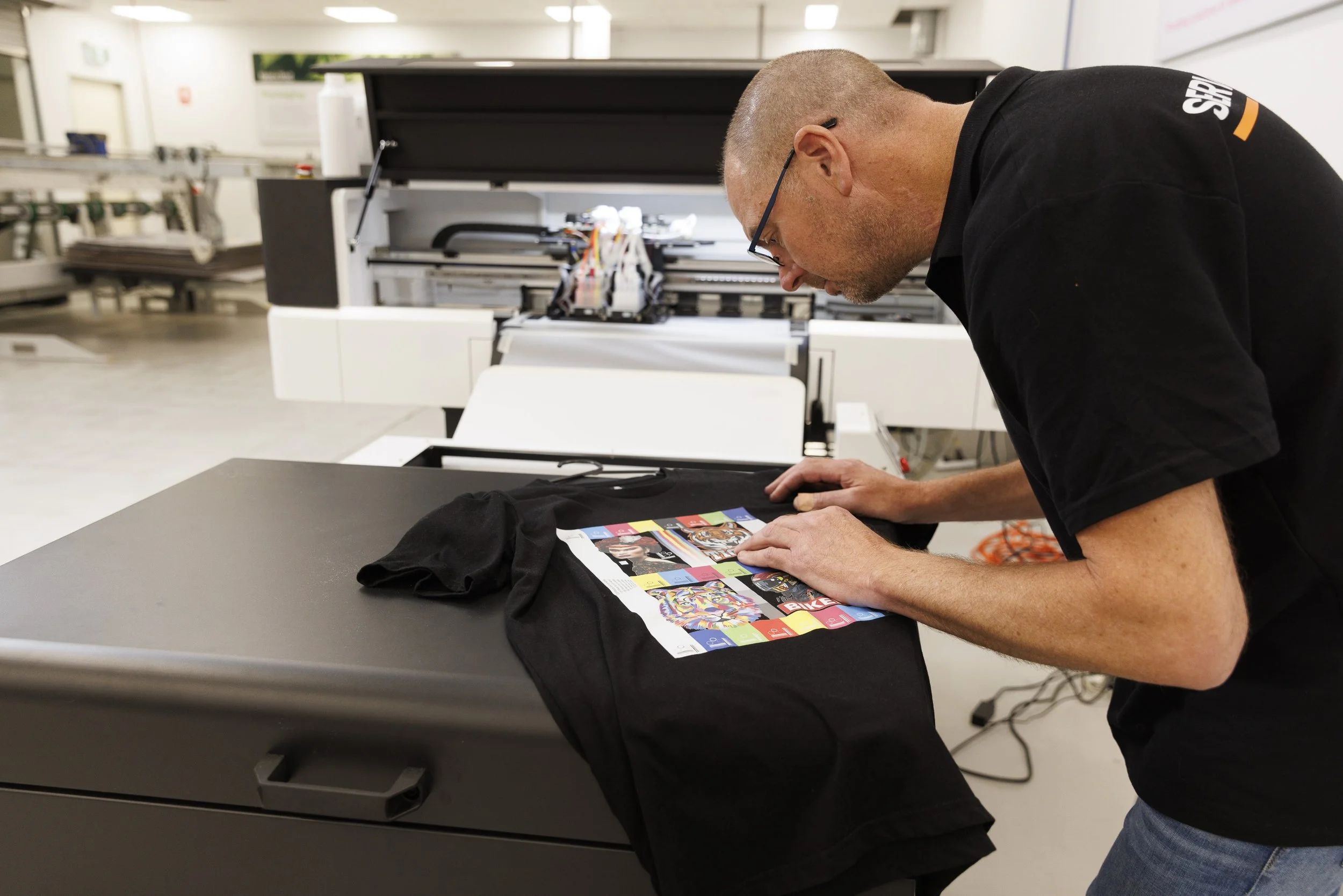
Digital · Heat Press
Heat Press Machines
Smart pressing, engineered for consistency.
Otter and OtterPro heat presses for DTF and sublimation transfer — from precise single-station pressing with the G1, through to fully automated dual-station production with the Air Press Slide. Built for accurate, repeatable results at any volume.
Three presses, one workflow
Single-station precision or dual-station automation — pick your production style below.
Single-station · Digital precision
Otter Ultra Heat Press G1
OU-G14050MB · 16" × 20" / 40 × 50cm
Smart pressing, engineered for consistency.
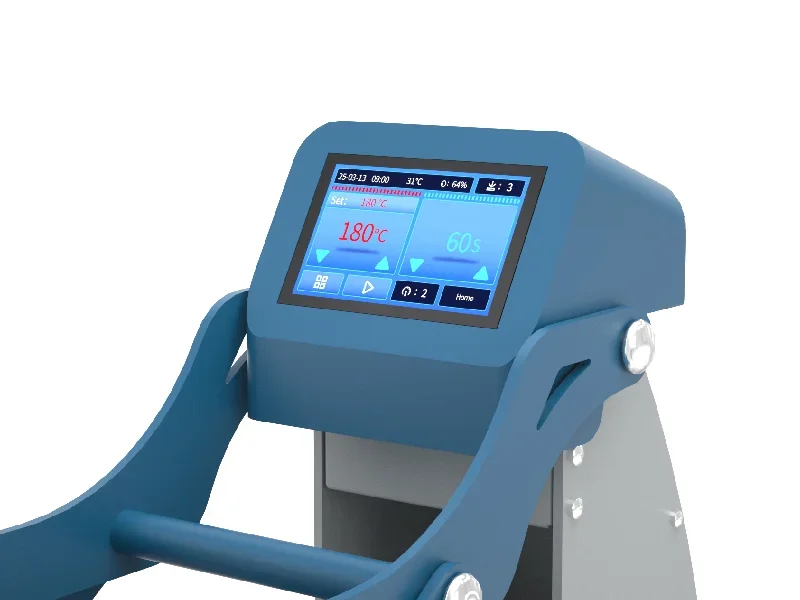
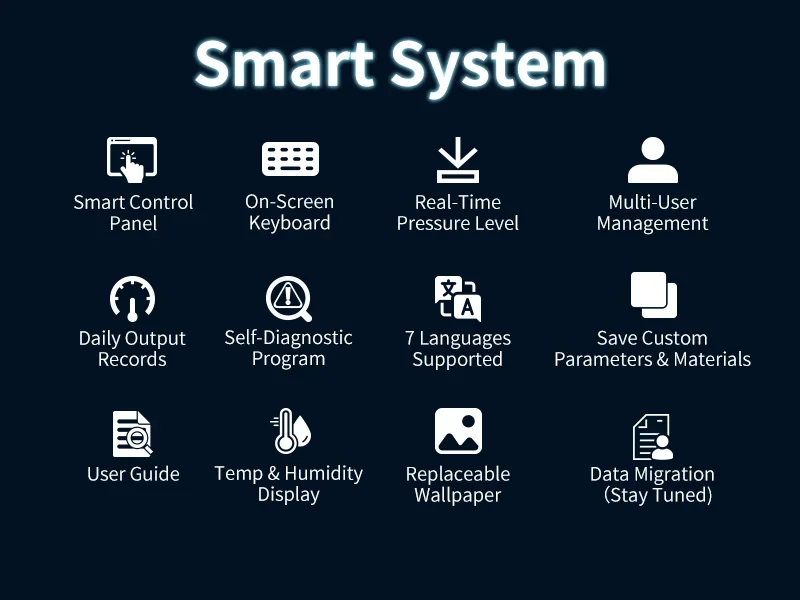
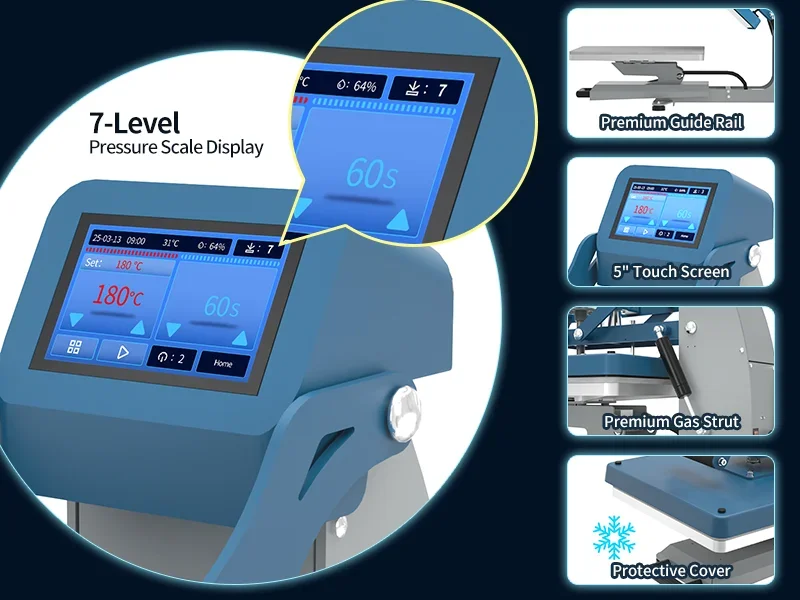
The Otter Ultra Heat Press G1 is a next-generation flat heat press built for DTF and sublimation transfer, combining precise digital control with a robust, heavy-duty frame. A large 5-inch capacitive touchscreen puts temperature, time, and pressure settings at your fingertips, helping operators achieve accurate, repeatable results on every press.
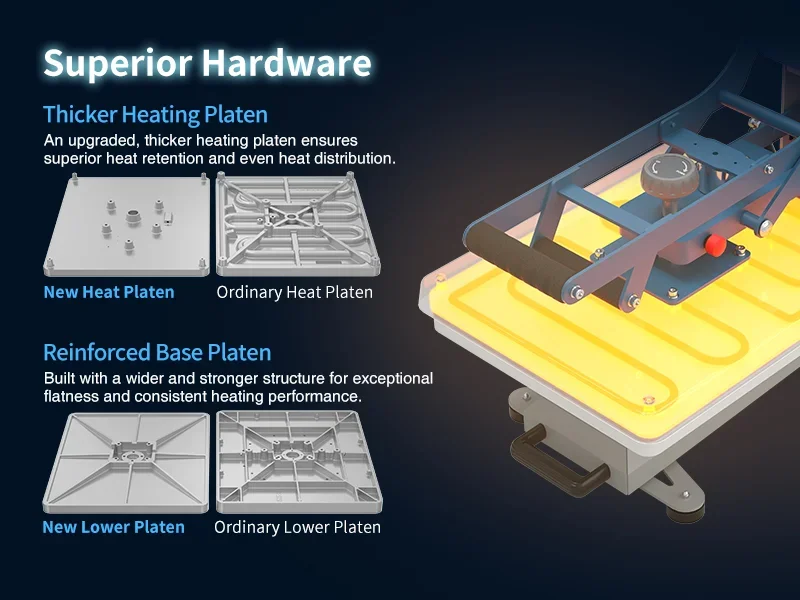
With a generous 40 x 50cm heat platen and up to 1750W of heating power, the G1 delivers even heat distribution across the full pressing area, supporting fast turnaround without compromising transfer quality. Adjustable pressure across seven levels means the machine can be dialled in for a wide range of garments and substrates, from lightweight tees to heavier workwear.
Best for shops wanting precise, repeatable single-station pressing in a compact footprint.
Compatible accessories
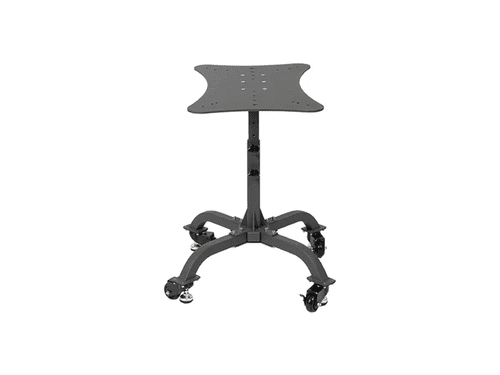
BHP472711D
Universal Heat Press Stand with Wheels
Height-adjustable rolling stand (708/758/808mm) sized for the G1 — 65kg max loading weight, grey finish.
A$450.00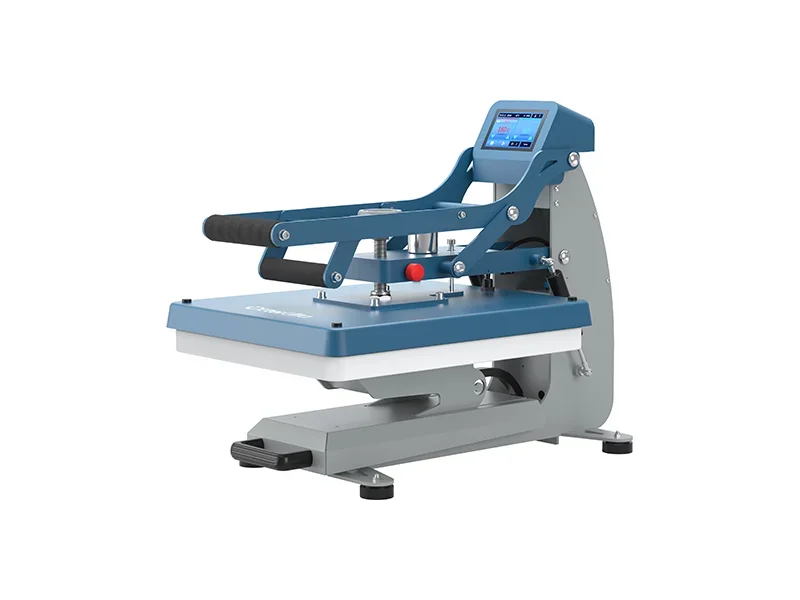
Platen size
40 × 50cm (16" × 20")
Control
5" capacitive touchscreen
Temperature
0–220°C / 32–428°F
Timer
0–999 seconds, digital
Pressure
0–7 adjustable levels
Heating power
1750W
Net weight
56.7kg
Dual-station · Pneumatic automation
OtterPro Air Press Slide
OT-QSH4050LB · P16B · 16" × 20" / 40 × 50cm
Automated pressing for high-volume production.
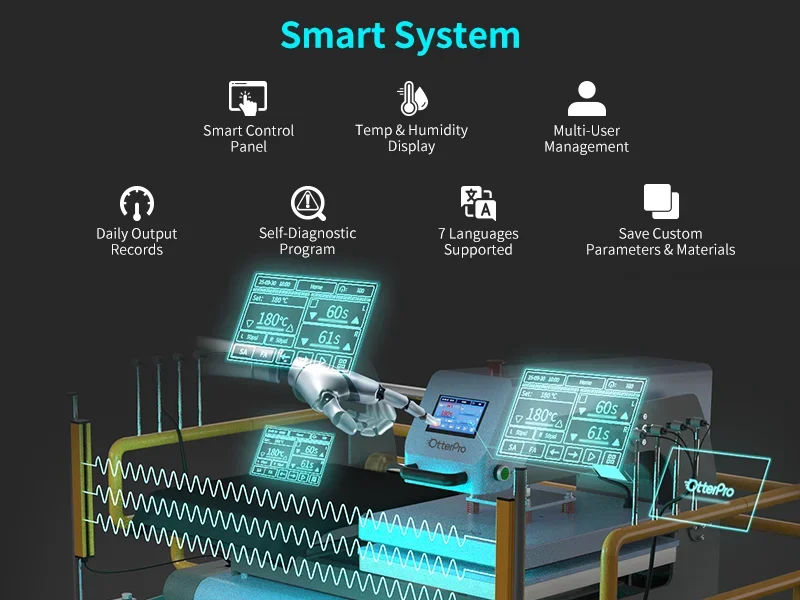
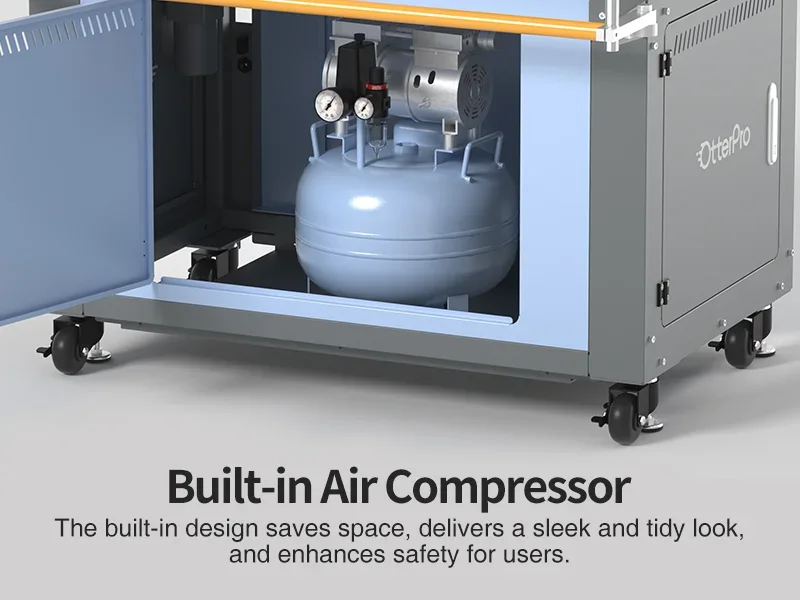
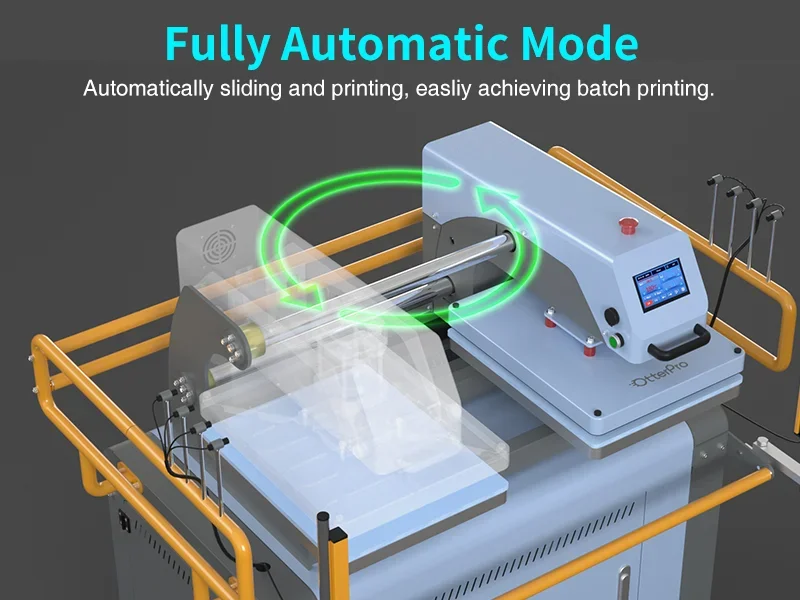
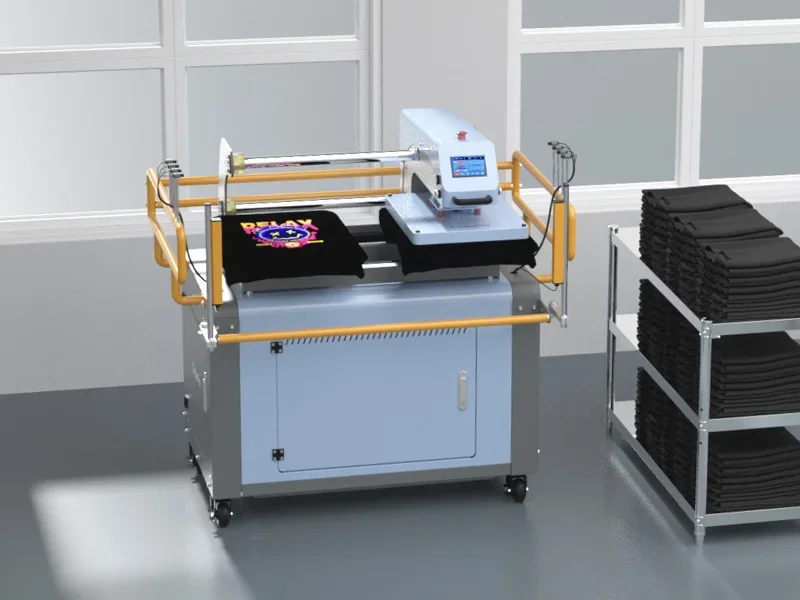
The OtterPro Air Press Slide is a fully pneumatic dual-station heat press built for busy print floors where speed and consistency matter most. A built-in air compressor drives automatic sliding and pressing, while precision infrared positioning keeps every placement accurate, run after run.
The dual-station layout means one platen can be loaded while the other is pressing, keeping production moving without downtime. A full safety barrier surrounds the heat press for operator protection, and four swivel castors make it easy to reposition on the shop floor as your layout changes.
Best for high-volume floors wanting continuous, hands-off production.
Compatible accessories
OT-KYJ30LB
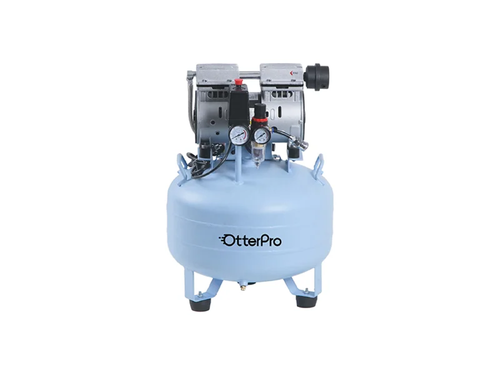
OtterPro 30L Air Compressor
Purpose-built compressor for the Air Press Slide — 30L tank, 0.8MPa max pressure, 100L/min air flow.
A$650.00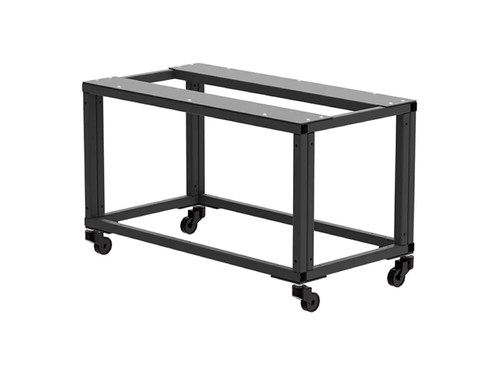
BHPP16-T
Universal Heat Press Stand with Wheels
Dedicated rolling stand for the dual-station Air Press Slide — cool grey finish, packed separately.
A$750.00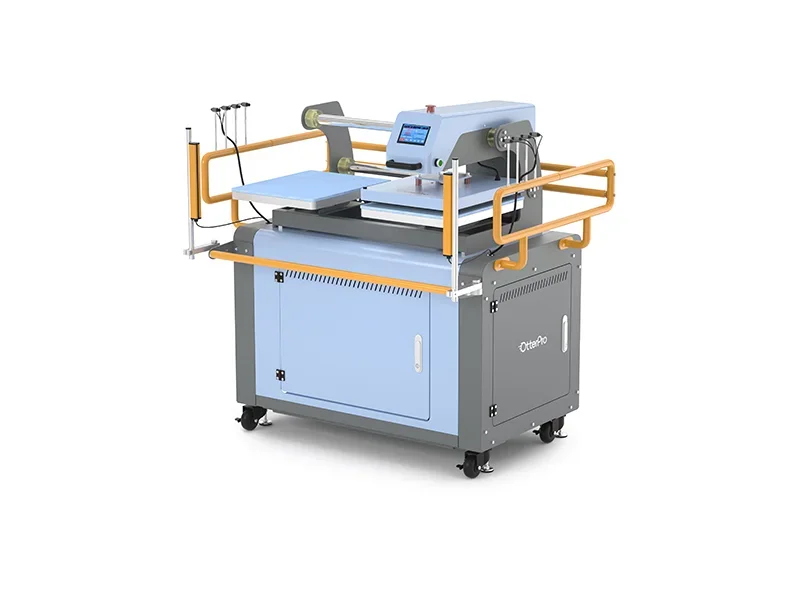
Platen size
40 × 50cm (16" × 20"), dual station
Operation
Automatic pneumatic sliding & pressing
Positioning
Precision infrared
Compressor
Built-in air compressor
Temperature
0–220°C / 32–428°F
Timer
0–999 seconds, digital
Safety
Full safety barrier, 4 swivel castors
Power
3950W / 2550W max
Why transfers fail — and how to get it right every time
Most pressing problems are not artwork problems. They come down to temperature, time and pressure working together — here's the process, and the two most common mistakes.
Position
Place the garment and transfer square on the platen — even minor misalignment shows immediately at these sizes.
Program
Set temperature, time and pressure to match the fabric — cotton, polyester and performance blends each need a different window.
Press
Full, even pressure across the platen is what pushes adhesive into the fibres — light or uneven pressure is the most common cause of peeling.
Peel
Hot-peel or cold-peel depending on the film — peeling at the wrong moment can undo an otherwise perfect press.
Common pressing problems
How the range solves it
A press is only half the workflow
A heat press alone doesn't get you printing — throughput ultimately depends on the printer and powder-curing system feeding it. For dual-station presses especially, an underpowered printer becomes the bottleneck long before the press does. Here's what pairs with each machine.
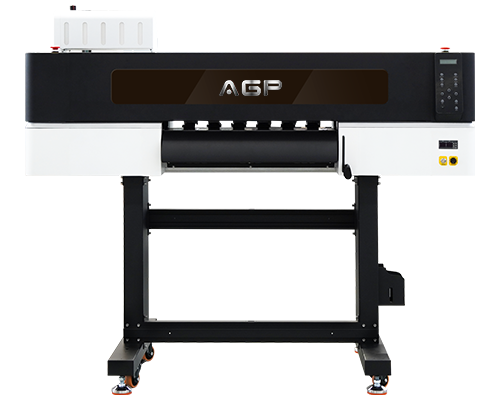 AGP DTF-T652/653/654
60cm DTF printer series — the natural entry-point pairing for the G1 single-station press.
AGP DTF-T652/653/654
60cm DTF printer series — the natural entry-point pairing for the G1 single-station press.
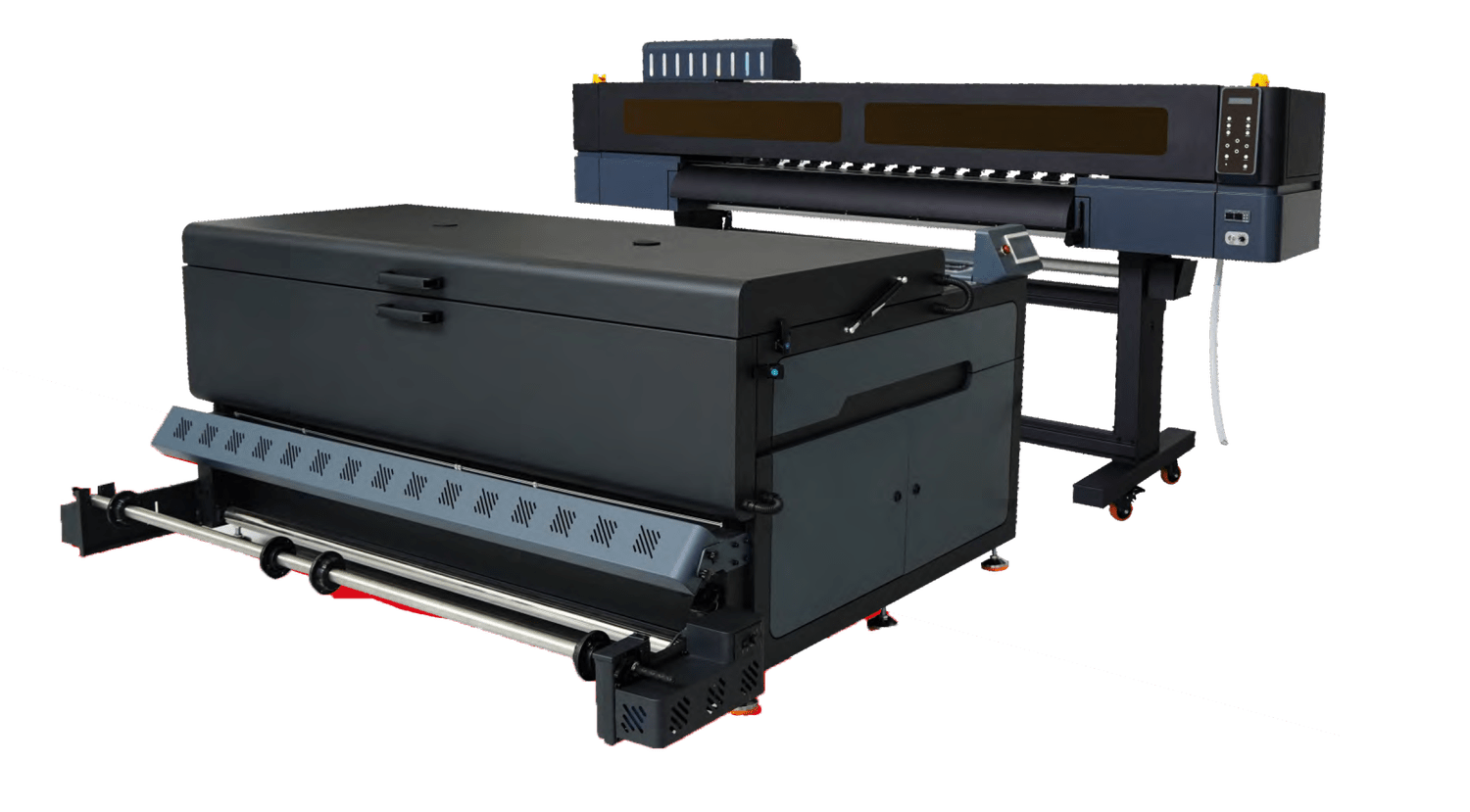 AGP DTF-T1600
1600mm high-volume printer built to feed dual-station presses without becoming the bottleneck.
AGP DTF-T1600
1600mm high-volume printer built to feed dual-station presses without becoming the bottleneck.
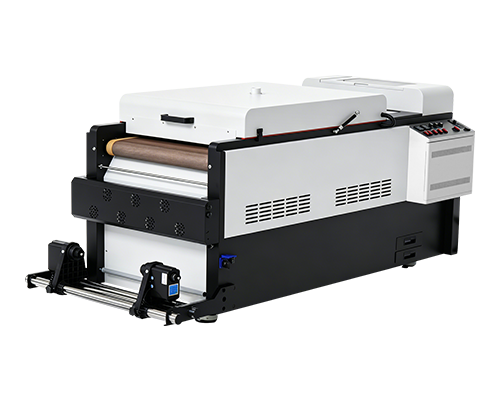 AGP H650L Powder Shaker
Automates powder application and curing — the step between printing and pressing that keeps dual-station lines fed.
AGP H650L Powder Shaker
Automates powder application and curing — the step between printing and pressing that keeps dual-station lines fed.
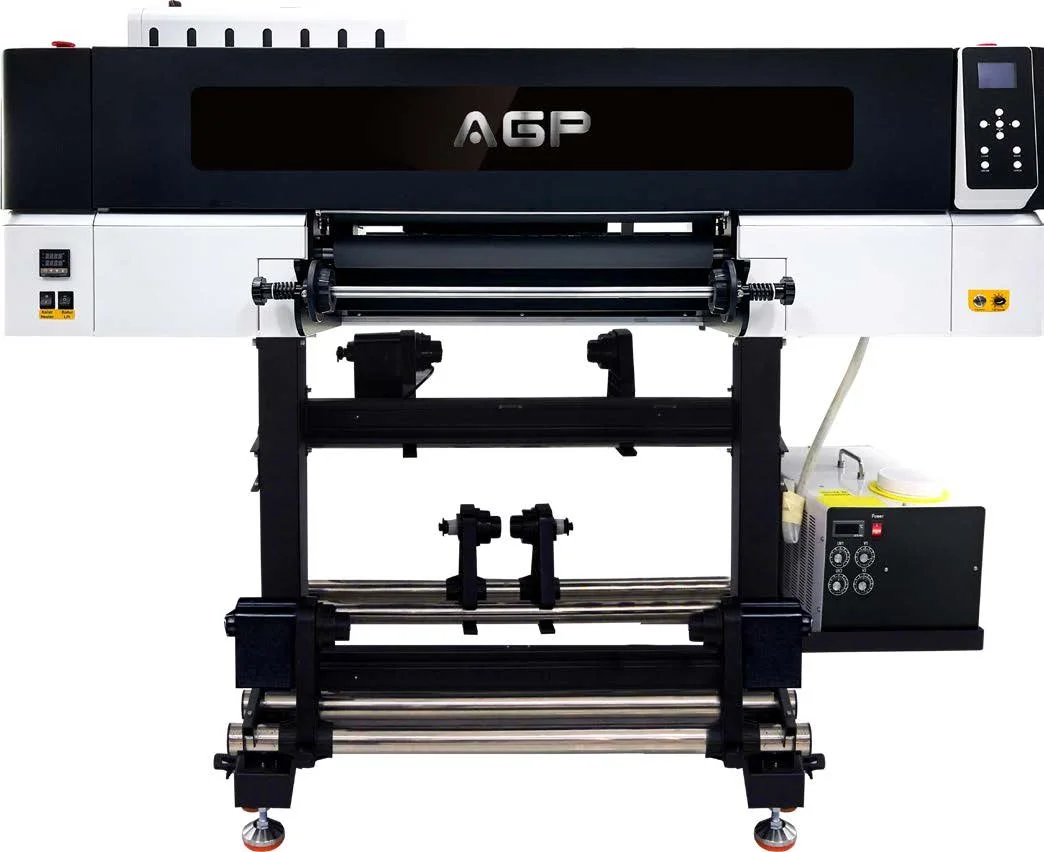 AGP UV-S30 (UV DTF)
For hard-surface decals rather than garments — bottles, glass and signage.
AGP UV-S30 (UV DTF)
For hard-surface decals rather than garments — bottles, glass and signage.
Complete your transfer workflow
Beyond the machines, you'll need the inks, film and powder built to run at these temperatures.
DTF Inks
CMYK + white ink formulated for durable, vibrant DTF transfers across your fabric range.
DTF Transfer Films
Hot-peel and cold-peel films to match your press cycle and finish.
Adhesive Powders
Hot-melt powders that bond reliably at the temperatures these presses run.
DTF Printers & Shakers
Pair your press with a complete AGP DTF printing and powder-curing line.
Why choose Kissel+Wolf for heat pressing
The right press, matched to the right workflow, backed locally.
Local Supply & Support
Installation guidance, operator training and ongoing technical support across Australia and New Zealand.
A Complete DTF Workflow
Press, printer, inks, films and powders — supplied and matched as one system, not separate purchases.
A Press for Every Floor
From single-station precision to dual-station automation — choose the throughput that matches your production.
Genuine Production Guidance
We help you match press, film and fabric settings — not just sell the machine and move on.
Heat press questions, answered
Peeling, temperature by fabric, single vs dual station, and what else you need.
Why do DTF transfers peel after washing even when the press looked fine?
This is almost always a pressure problem, not an artwork problem. Heat melts the adhesive, but it is full, even pressure that drives that adhesive into the fabric fibres. Light or uneven pressure across the platen is the single most common cause of edge peeling — which is why platen flatness and true, repeatable pressure matter more than raw wattage.
What temperature should I run for DTF transfers?
It depends on the fabric, not just the film. As a general guide, cotton tolerates higher heat (around 160-165°C), polyester needs to run cooler to avoid dye migration, and delicate synthetics like nylon need lower heat again. Always start from the film manufacturer specification and test on a hidden seam before a full run.
Should I choose the G1 or the Air Press Slide?
It comes down to volume and workflow. The G1 is a single-station press that suits shops wanting precision and a compact footprint for lower to mid volumes. The Air Press Slide is dual-station and pneumatic — you load one side while the other presses, which removes the dead time a single station has between cycles. It suits busier floors running continuous production.
Does the Air Press Slide come with a compressor and stand included?
No — the compressor and stand are supplied as separate accessories. The Air Press Slide pairs with the OtterPro 30L Air Compressor (OT-KYJ30LB) and the BHPP16-T rolling stand; the G1 pairs with its own BHP472711D height-adjustable stand. We list current pricing for each alongside its matching press.
What else do I need alongside a heat press?
A heat press is one part of the DTF workflow. You will also need DTF transfer film, CMYK + white ink, hot-melt adhesive powder, and typically a DTF printer and powder shaker to produce the transfers you press. We can spec the full line, not just the press.
What is the lead time on these presses?
Current lead time across the Otter and OtterPro range is 4–6 weeks. We recommend ordering ahead of any seasonal production peaks — talk to us early and we can advise exact timing for your order.
Talk to a heat press specialist
Whether you need precise single-station control or dual-station volume, our team can help you match the right press to your fabric mix and production speed — installed and backed across Australia and New Zealand.
Contact Us