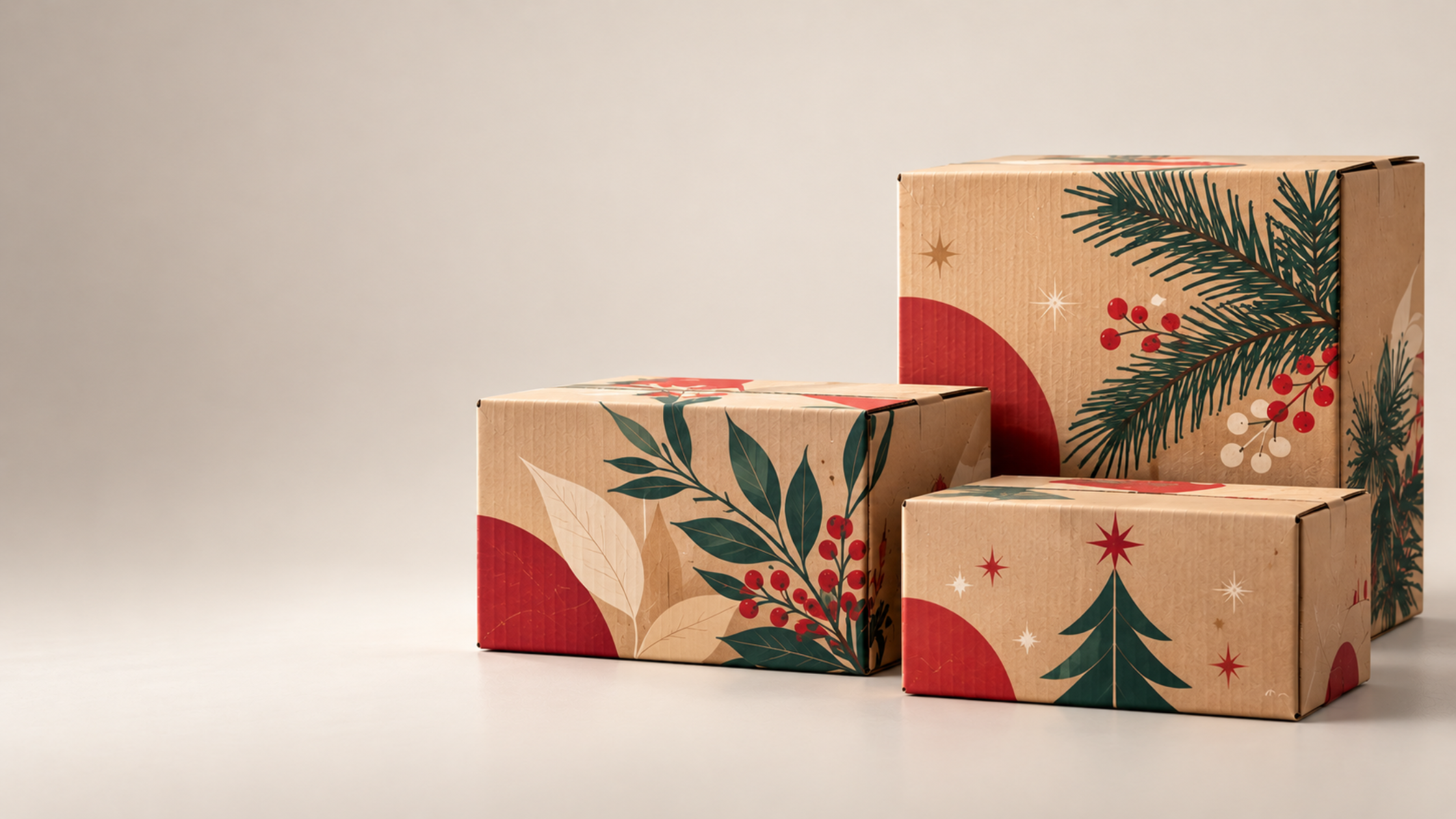
Every corrugated converter knows the order that looks good until you cost it. It's 300 printed boxes for a Christmas promotion, 500 for a winery's limited release, or a regional variant that's needed in three weeks. Run on flexo, the plates and make-ready can cost more than the print itself. Turn it down, and the customer takes the work somewhere else, often along with the long runs.
Digital printing on corrugated changes that. It isn't cheaper than flexo for every job, and it doesn't need to be. It just has to be cheaper for the jobs flexo handles badly. Here's where that line sits, and how to tell whether your order book is on the right side of it.
Why corrugated runs are getting shorter
Brands now sell more product variants than they used to, and each variant needs its own box. A single product line can need different packaging for different retailers, regions, promotions and pack sizes.
E-commerce has made the box part of the product. When the shipper is the first thing a customer sees, brands want it printed, and they want to change it more often.
Buyers are also holding less stock. Instead of one large order to last the year, they order smaller quantities more often, closer to when they need them. That's good for their cash flow, but it turns one long run into several short ones. For a converter set up around long runs, that means more changeovers and more jobs that barely cover their set-up costs.
The maths: set-up cost versus cost per box
Flexo and digital spread their costs differently. Flexo has high fixed costs for every job: plates, mounting, make-ready, and the board and ink wasted while the press comes up to colour. Once it's running, each box is cheap. Digital has almost no fixed costs per job, because there are no plates and very little make-ready. Each box costs more to print, though, mostly in ink.
That means there's a run length where the two cost the same. Below it, digital is cheaper. Above it, flexo is. You can find it with your own numbers:
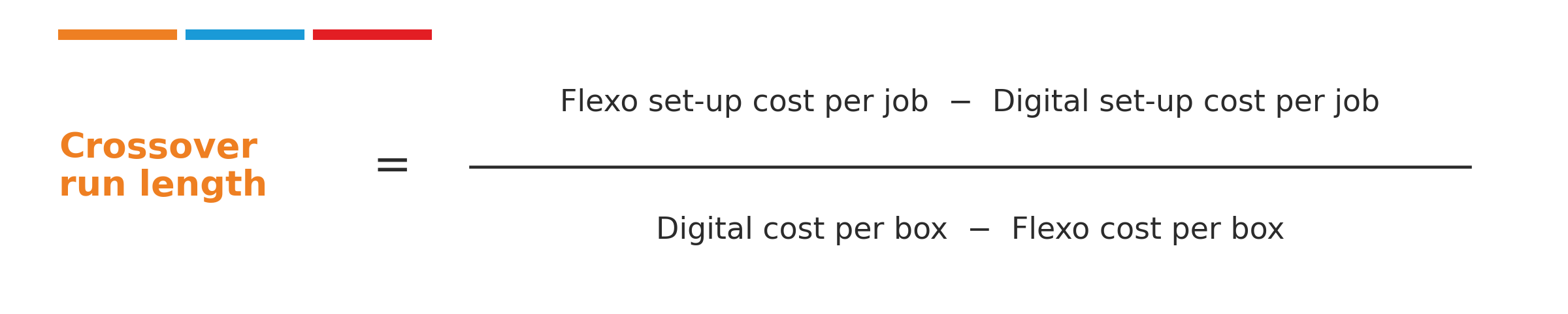
The crossover isn't a single industry figure. It depends on box size, ink coverage, the number of colours, plate costs and how much waste your flexo line produces at start-up. That's why it's worth working out from your own job history rather than from a brochure.
The set-up cost also isn't just money. Every changeover on a flexo line takes press time that could have gone to a profitable long run. Moving short jobs to digital frees that time up, which is often worth as much as the saving on the short jobs themselves.
Seasonal and promotional work
Seasonal packaging is where short runs pay best. The quantities are small, the deadlines are fixed, and the design is usually used once.
The Australian retail year is full of these moments: Christmas and Black Friday, Mother's Day and Father's Day, Easter, and end-of-financial-year promotions. Add produce seasons, limited wine and craft beer releases, sporting finals and local events, and a converter can see short-run orders almost every month.
On flexo, each of those jobs needs new plates for a design that may never run again. On digital, a seasonal job costs the same to set up as any other, and changing the artwork next year costs nothing extra. Digital also makes it possible to say yes to late changes, such as a new price, a different retailer logo or a last-minute promotion, without throwing away a set of plates.
Where flexo still wins
For long runs of the same design, flexo is still the cheapest way to print corrugated. A standard shipper that runs in the tens of thousands every month belongs on a flexo line, and digital won't change that.
That's why most converters who add digital don't replace anything. They split the work. Long, repeat runs stay on flexo, where they're most profitable. Short runs, seasonal jobs, prototypes and variants move to digital, where they finally make money. The flexo line spends less time on changeovers and more time running. To see what that looks like at scale, read how Opal Specialty Packaging built a digital packaging workflow across four sites.
The question isn't whether digital is better than flexo. It's how much of your order book is going through the wrong process.
What to look at before investing
Start with your job history, not a machine brochure. Pull the last twelve months of orders and sort them by run length. Count how many jobs fall below your likely crossover point, how much press time their changeovers took, and how many short-run enquiries you turned down or quoted too high to win. That tells you whether digital would carry its own weight.
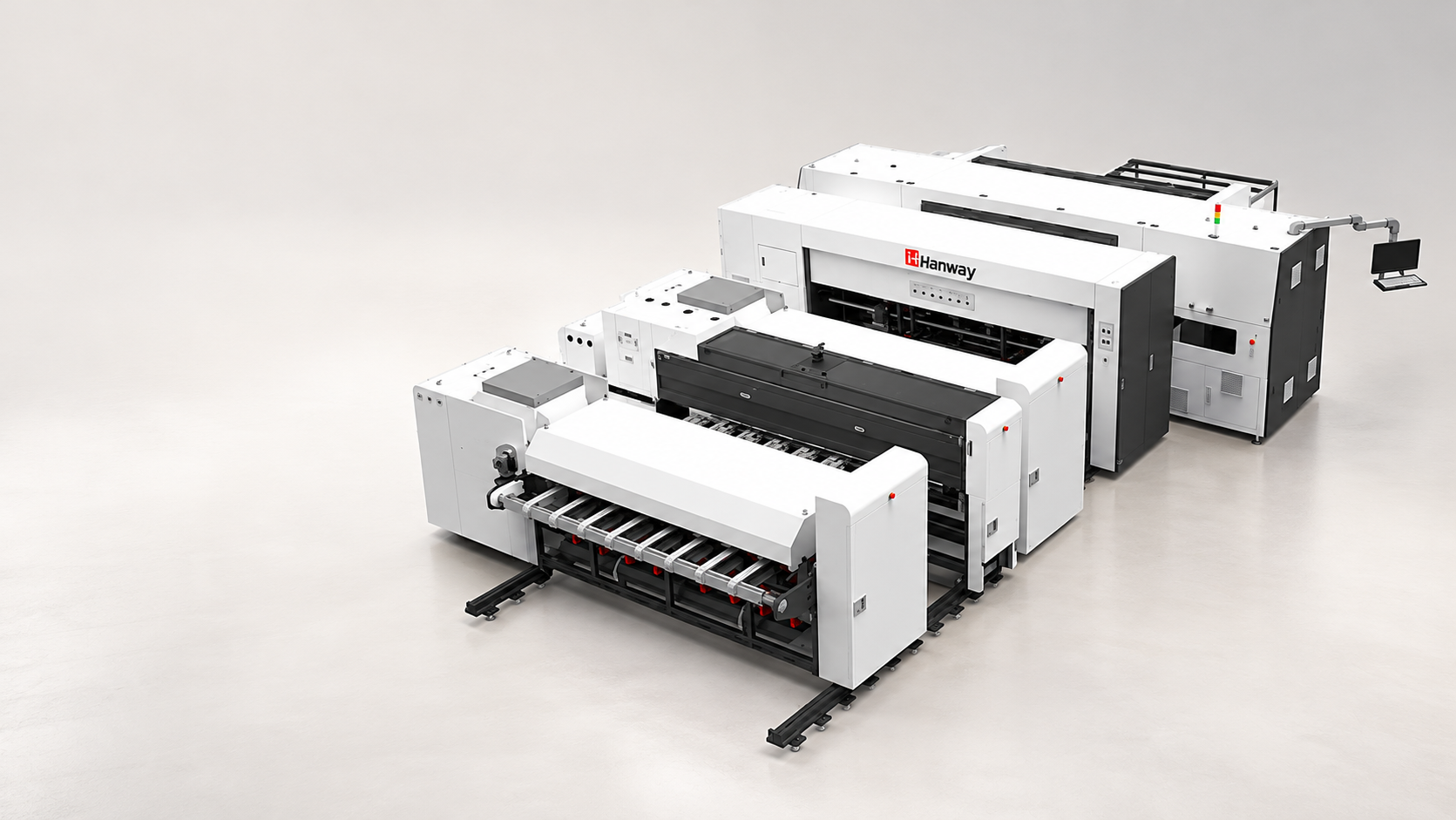
Then look at speed. Early digital corrugated printers were too slow for anything but samples. Current systems are a different category. The Hanway Revo 2500W Pro, a water-based press we supply, prints at up to 1,400 m² an hour, which puts genuine production volumes within reach.
Finally, think about finishing. A digitally printed sheet still has to be cut and creased. If a short run needs a new cutting die, you've moved the set-up cost rather than removed it. Digital cutting tables solve that by cutting, creasing and kiss-cutting straight from the file, with no die and no minimum run. Printing and cutting digitally together is what makes short-run corrugated truly pay.
Short runs.
Big opportunities.
Less make-ready. More flexibility.
Printer, ink and support from one supplier
A digital corrugated printer is only as good as the ink that runs through it and the people who keep it running. K+W supplies all three: Hanway digital corrugated printers, the inks they're built for, and a local technical team that looks after them. We can also help you plan the finishing side with iECHO digital cutting and workflow software, so your short runs pay from print to pallet.
If you'd like to know where your crossover point sits, send us a sample of your job history and we'll help you work through it.
Frequently Asked Questions
Will digital print match the quality of my flexo work?
For most corrugated work, yes, and often better on detailed artwork, photography and small text, because there's no plate to wear or spread ink. The best way to judge is to see your own artwork printed on your own board, so ask us for a sample.
Why water-based ink?
Water-based inks suit corrugated board well and avoid the solvent handling that some other ink systems need. If your packaging has food-contact or retailer requirements, check the specific ink's compliance documentation for your application. We can help you find it.