Essential Screen Printing Chemicals and What They Do
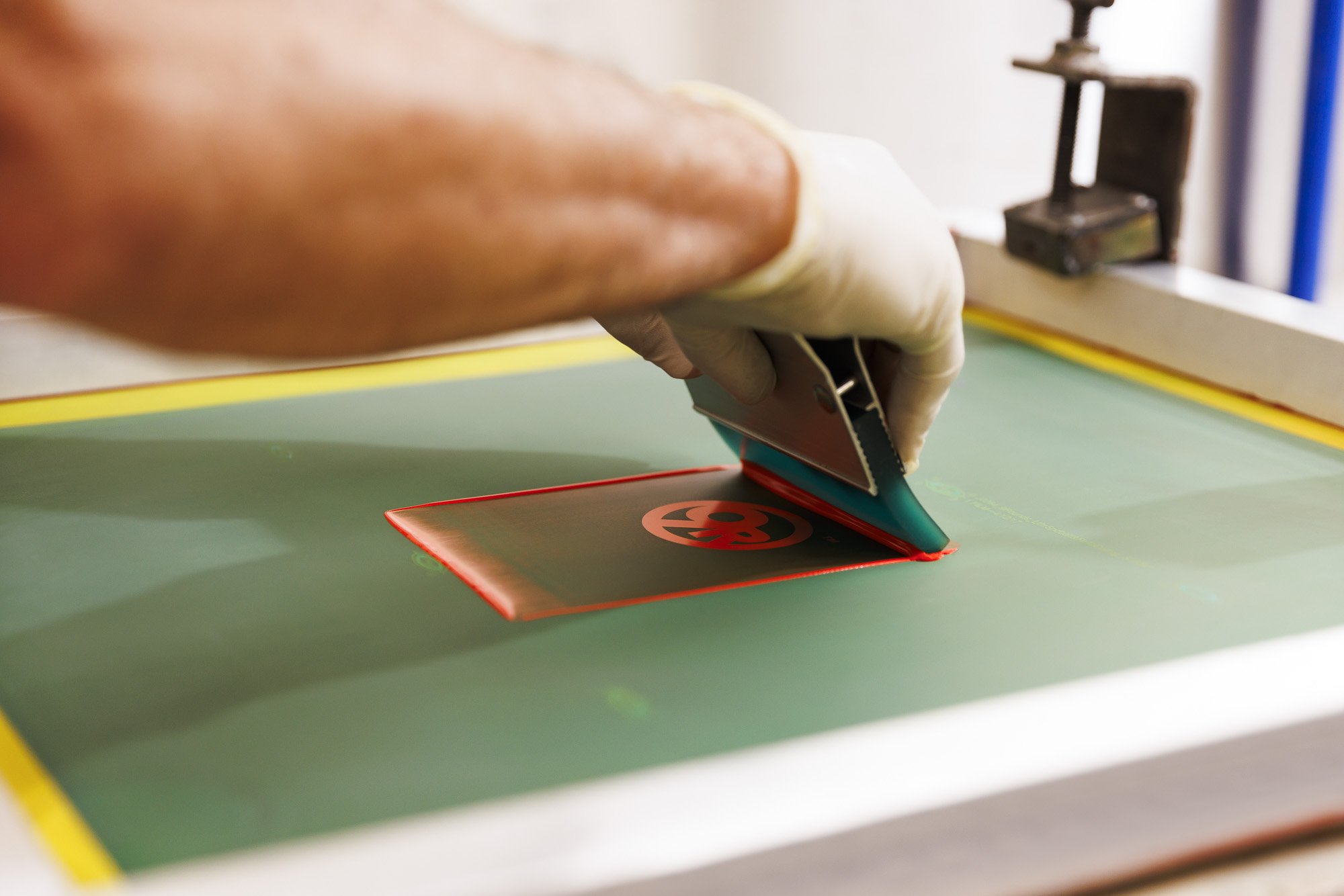
Screen tension measurement is a critical preparation step that supports consistent screen printing production.
Screen printing quality doesn’t start with ink or presses.
It starts with how screens are prepared, maintained, and reclaimed.
Throughout the screen printing workflow, specialised chemicals help printers clean mesh, protect stencils, remove ink residues, and prepare screens for the next job.
When the correct chemicals are used at the right stage of production, printers can reduce stencil failures, extend screen life, and maintain consistent print results.
Below is a simple overview of the essential chemicals used across the screen printing process.
What chemicals are used in screen printing?
Screen printing uses several specialised chemicals to prepare, maintain, and reclaim screens throughout the production process. These products help clean mesh, strengthen stencils, remove ink residues, and restore screens for reuse.
Common screen printing chemicals include:
Mesh degreasers and preparation solutions
Stencil blockout and correction fluids
Stencil hardeners for improved durability
Ink and screen washes for press-side cleaning
Reclaiming chemicals to remove emulsions
Haze and ghost removers to restore mesh
Frame adhesives for mesh bonding
Using the correct combination of these products helps maintain a stable and repeatable printing process.
Degreasers and Mesh Preparation
Before applying emulsion, mesh must be completely clean.
Dust, oils, and contaminants can prevent emulsions from bonding properly to the mesh, which may lead to pinholes, stencil breakdown, or uneven exposure.
Degreasers prepare the mesh surface so stencils adhere consistently.
Examples include:
KIWO Degreaser 1:20 Concentrate, a biodegradable degreaser designed to remove oils and contaminants from mesh.
Ulano Ulanogel 23, which combines degreasing and light mesh roughening to improve stencil adhesion.
Ulano All Mesh Prep No. 25, designed to improve mesh wetting and film adhesion.
Proper mesh preparation significantly improves stencil performance during production.

Clean mesh screens prepared for coating.
Proper degreasing and mesh preparation help ensure emulsions bond evenly to the screen surface.
Stencil Blockout and Image Correction
Even with careful exposure, small imperfections such as pinholes or stencil gaps may appear.
Blockout chemicals seal these areas before printing, preventing ink from passing through unintended parts of the screen.
Common products include:
KIWO Blockout Blue, a high-viscosity screen filler for precision blocking.
KIWO Blockout Red, an economical option for covering larger screen areas.
Ulano Screen Filler No. 65, a water-soluble blockout for fine to medium mesh counts.
Blockouts allow printers to correct minor stencil issues quickly without remaking the screen.
Stencil Hardeners
For longer print runs, stencil durability becomes critical.
Stencil hardeners improve the resistance of emulsions against water, inks, and cleaning chemicals, extending stencil life during production.
Examples include:
Ulano Hardener X, used to strengthen textile emulsions.
KIWO Hardener HP, which increases water resistance while still allowing screens to be reclaimed.
KIWO Hardener K, designed for maximum stencil durability.
Depending on the hardener used, some screens may become more difficult to reclaim after printing.
Screen Reclaiming Chemicals
Once a job is complete, screens must be reclaimed so they can be reused.
Stencil removers dissolve emulsion and capillary films from the mesh, restoring the screen for the next production cycle.
Examples include:
KIWO Stencil Remover 1:20 Concentrate, suitable for manual or automatic reclaiming systems.
Pregasol EP3 Stencil Remover, a powder-based solution designed for polyvinyl alcohol copying materials.
Ulano Stencil Remover Paste No. 5, a ready-to-use paste for removing emulsions and stencil films.
Efficient reclaiming keeps screen rotation moving smoothly in busy production environments.
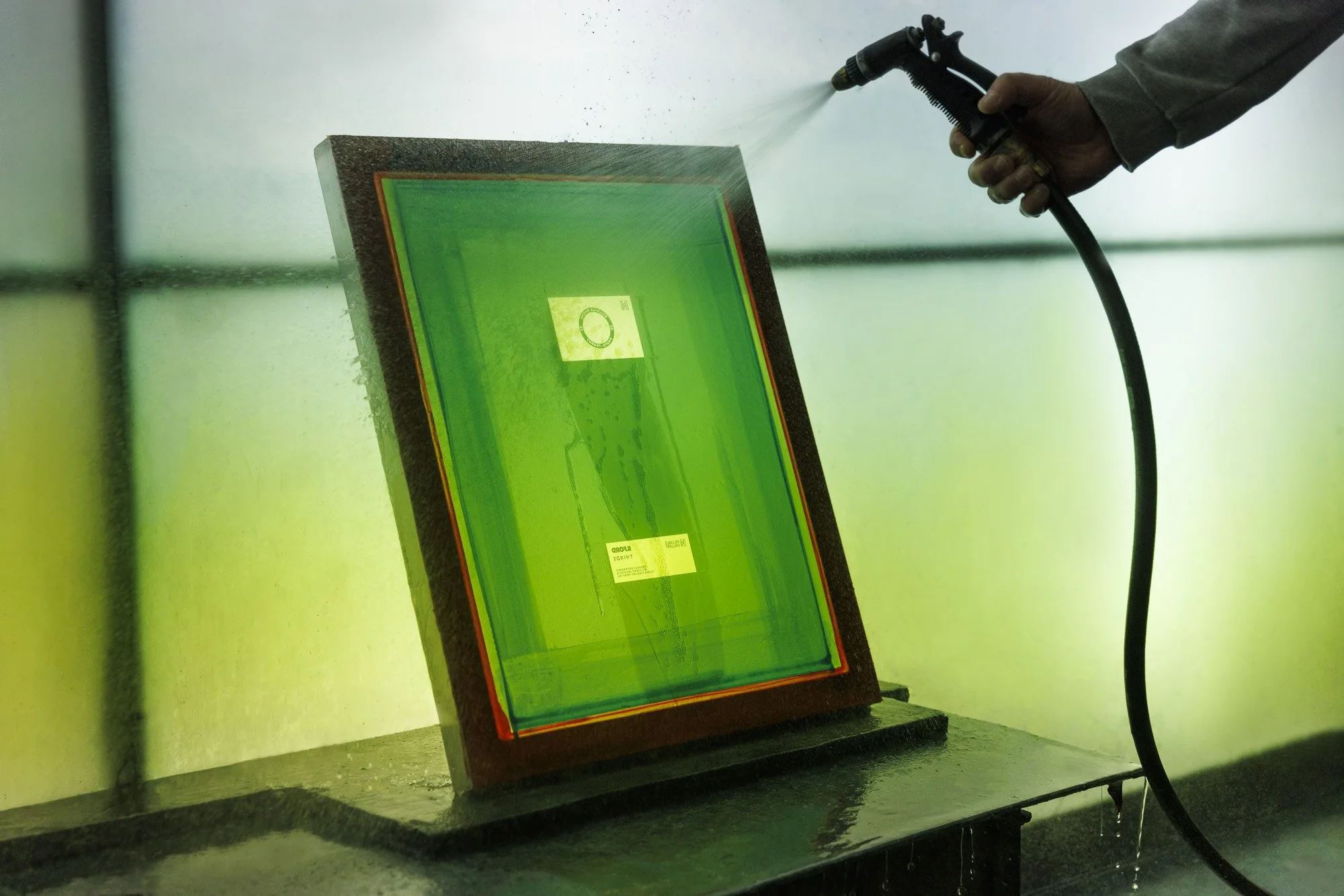
Reclaiming a screen after production removes emulsion and stencil residues, allowing the mesh to be reused for the next print job.
Haze and Ghost Image Removal
Over time, screens may develop ghost images or ink stains embedded in the mesh.
Haze removers help restore the mesh surface and prevent image contamination during future prints.
Products such as KIWOCLEAN AQ 820 and KIWO Pregan Paste are commonly used to remove stubborn ink residues and ghost images.
Supporting a Consistent Screen Printing Workflow
Every stage of screen printing — from mesh preparation to reclaiming — relies on the correct chemical solutions.
When the right chemicals are used consistently, printers can:
reduce stencil failures
extend screen lifespan
improve print consistency
streamline reclaiming workflows
At Kissel+Wolf, we supply a full range of screen printing chemicals and cleaning solutions designed to support professional print production environments.
Explore the full range of screen printing chemicals or contact our team to find the right products for your workflow.
Get the Right Screen Printing Chemicals for Your Workflow
Choosing the right combination of screen printing chemicals can make a significant difference in print quality, stencil performance and production efficiency.
Tell us about your setup, and our team will recommend the right solutions for your workflow.