DTF Printing for Small Businesses: Equipment, Heat Press, and Workflow Guide
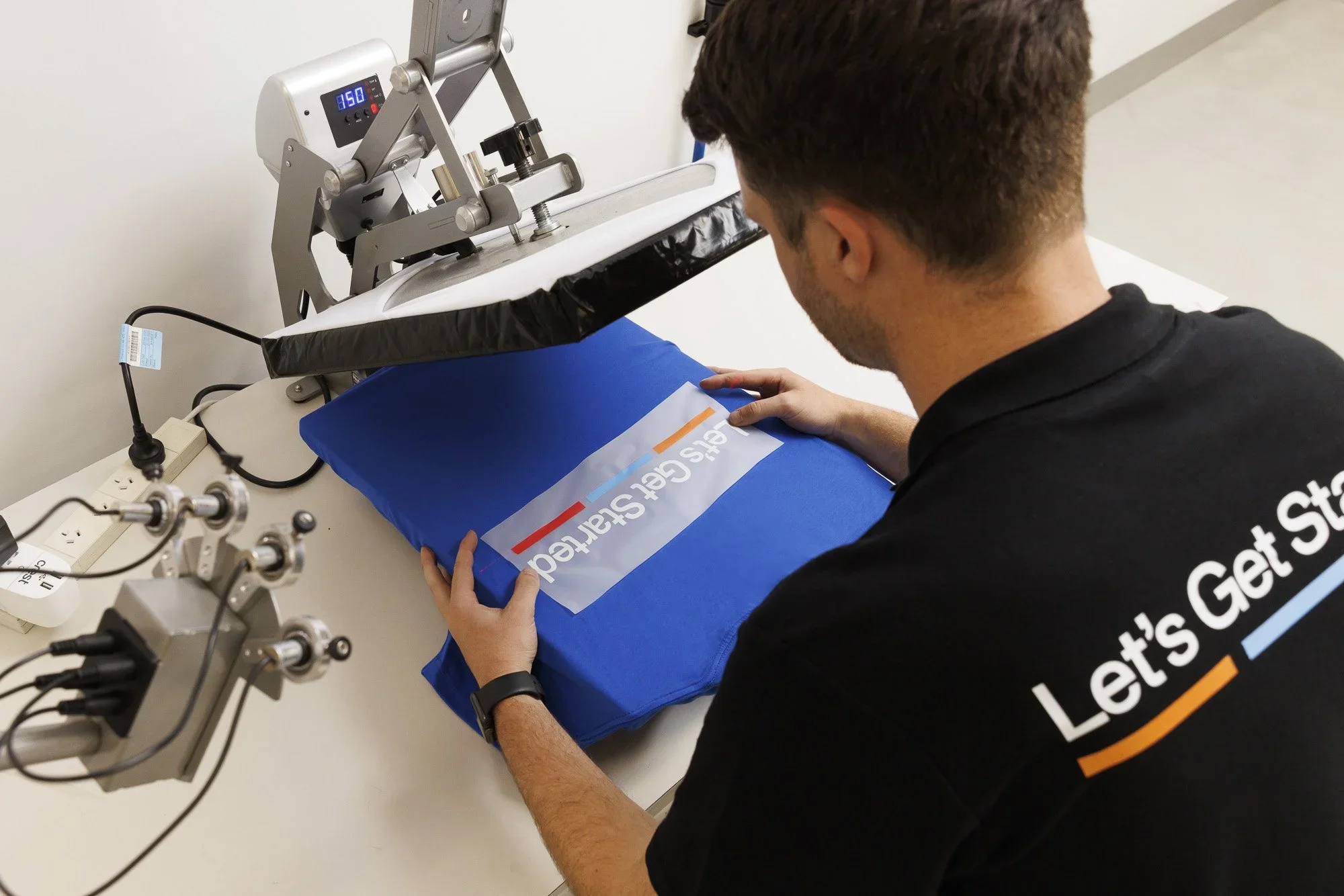
Consistent DTF results are not defined by printing alone — they are finalised at the heat press stage.
DTF printing is often positioned as an easy entry point for small businesses.
And in many ways, it is.
But the challenge isn’t starting — it’s setting up a process that can produce consistent results from the beginning.
Because in DTF production, early setup decisions tend to define long-term output.
Starting DTF: What Matters First
For small businesses, the goal is not just to get prints out.
It’s to avoid:
repeated trial and error
wasted materials
inconsistent results across orders
DTF can appear straightforward on the surface, but each stage of the process introduces variables that must be controlled early.
Choosing Equipment: More Than Just the Printer
A typical DTF setup includes:
But these are not independent choices.
Each decision affects how the next stage performs.
For example:
a stable printer setup won’t compensate for poor transfer conditions
high-quality materials can still fail under inconsistent application
This is why equipment selection should be approached as a system — even at a small scale.
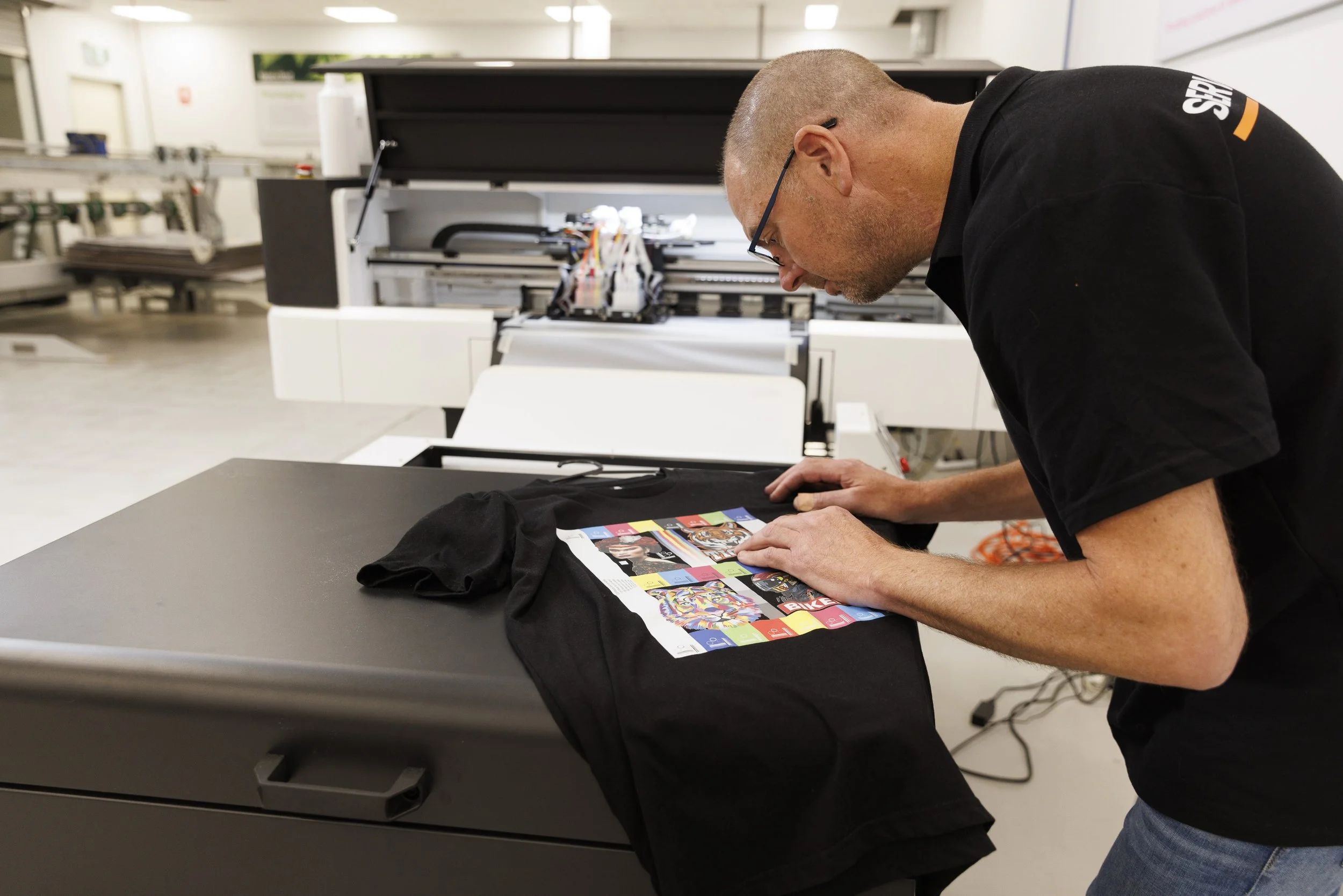
A DTF setup involves multiple components, each influencing how the final output performs.
Where Most Small Setups Go Wrong
Many small businesses focus heavily on the printer.
But issues often appear later in the process.
Common problems include:
inconsistent adhesion
transfers that peel or crack
uneven finishes across batches
These are rarely caused by one component alone.
They are usually the result of gaps between stages.
The Heat Press: Where Output Is Finalised
Among all equipment in a DTF setup, the heat press is often underestimated.
But this is where the final result is determined.
In DTF production, the heat press is not just a final step — it is where the print either succeeds or fails.
Why It Matters
Even when printing and curing are done correctly, the heat press controls:
how the adhesive activates
how the design bonds to the fabric
how the final finish appears
Small inconsistencies at this stage can lead to:
lifting or peeling
reduced durability
inconsistent output across orders
Understanding how this stage interacts with earlier steps is essential — particularly how materials behave across the process, as outlined in our guide on how DTF ink, film, and powder work together.
What Needs to Be Controlled
For small businesses, consistency comes from standardisation.
This means controlling:
temperature
pressure
timing
These variables must remain stable across every job.
Because unlike printing, this stage directly affects the final product delivered to the customer.
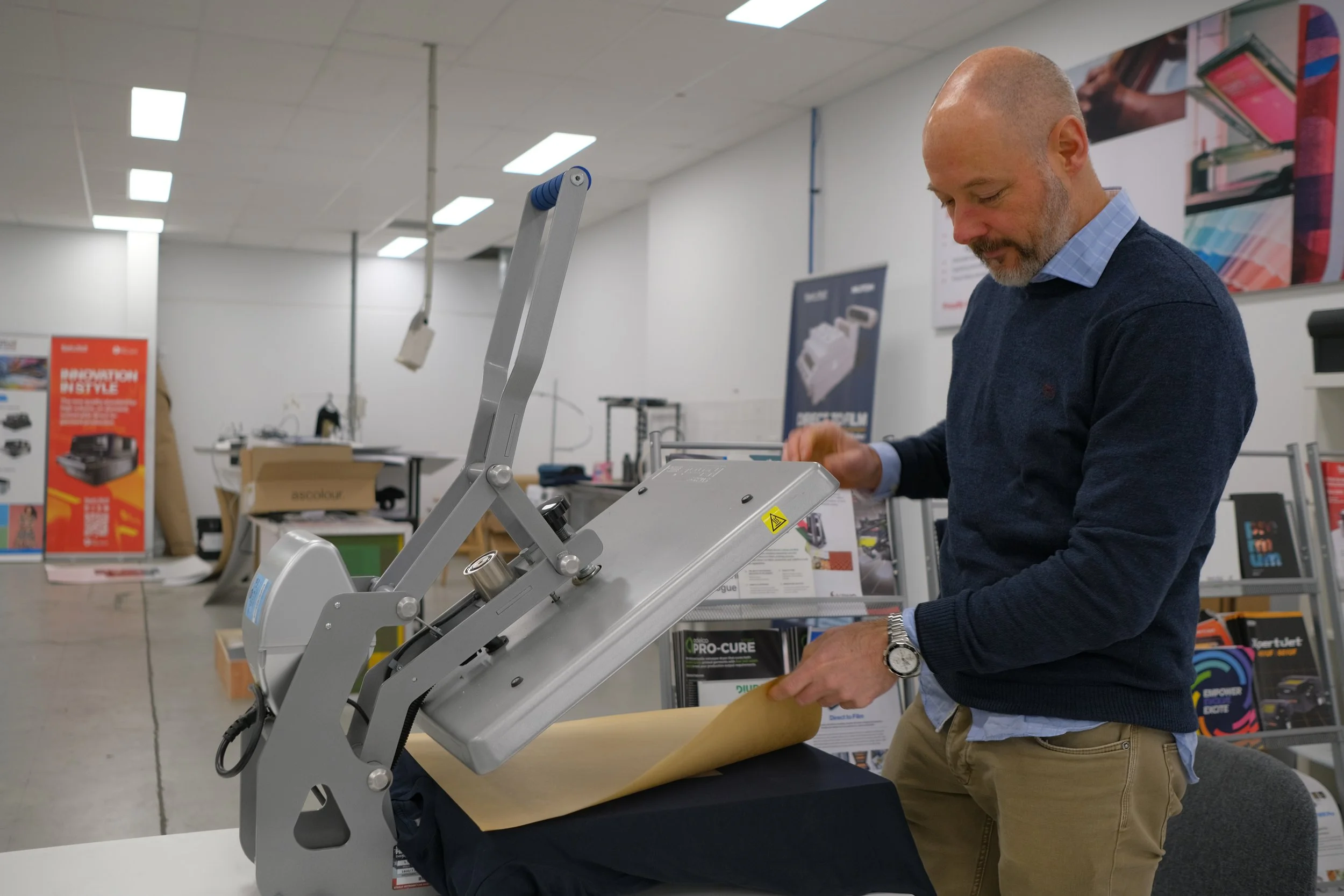
Even with correct printing and curing, the final result depends on how the heat press stage is controlled.
Understanding Workflow at a Small Scale
DTF production is often seen as a simple sequence:
print → powder → cure → press
But in practice, each stage influences the next.
For example:
uneven powder affects curing
inconsistent curing affects transfer
poor transfer affects durability
This chain means that small variations can compound across the workflow — especially without standardised processes.
Building a Reliable Setup Early
For small businesses, the goal is not complexity.
It’s control.
This includes:
choosing compatible materials — including tested DTF ink, film, and powder systems — helps reduce variability across production.
maintaining consistent curing conditions
standardising heat press settings
following the same workflow for each job
A controlled setup reduces variability and makes it easier to scale production over time.
Conclusion
DTF printing offers small businesses a flexible way to enter custom production.
But success depends less on the process itself and more on how that process is set up and managed.
From equipment selection to heat transfer, each decision affects the final result.
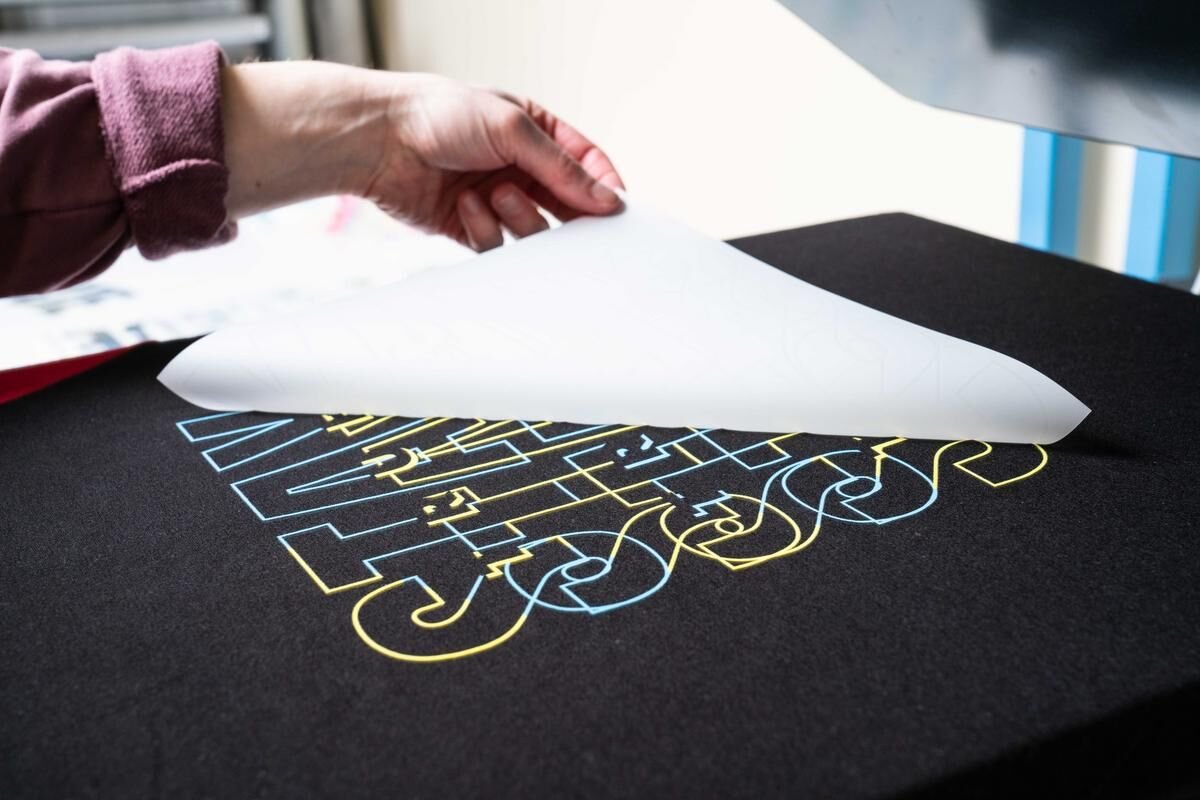
Consistent output is achieved when each stage of the process is controlled and aligned.
At Kissel+Wolf, we supply DTF ink systems, films, and adhesive powders designed to work together across modern textile production environments.
For a deeper understanding of how materials interact across the process, you can also read our guide on how DTF components work together.
Get the Right DTF Workflow for Your Production
If you're setting up DTF production, it may be worth reviewing how each stage — particularly heat transfer — is controlled and standardised across your workflow.
Contact us to discuss your DTF workflow