Your press is probably automated. Your dryer too. But walk into the screen room, and screens are still being stretched, coated, washed and reclaimed by hand. That's where the hours and the rework hide.
You don't need to automate everything at once. For most shops, the right first step is reclaiming or coating. Here's what each stage does, and how to tell where to start.
The seven stages of the screen room
Every screen loops through the same seven stages: stretch, coat, image, expose, print, cure, reclaim, then back to coating. Each stage affects the next, and each one can be automated on its own.
What automation changes at each stage
1. Stretching
The problem: uneven tension throws registration out, however well the press is set.
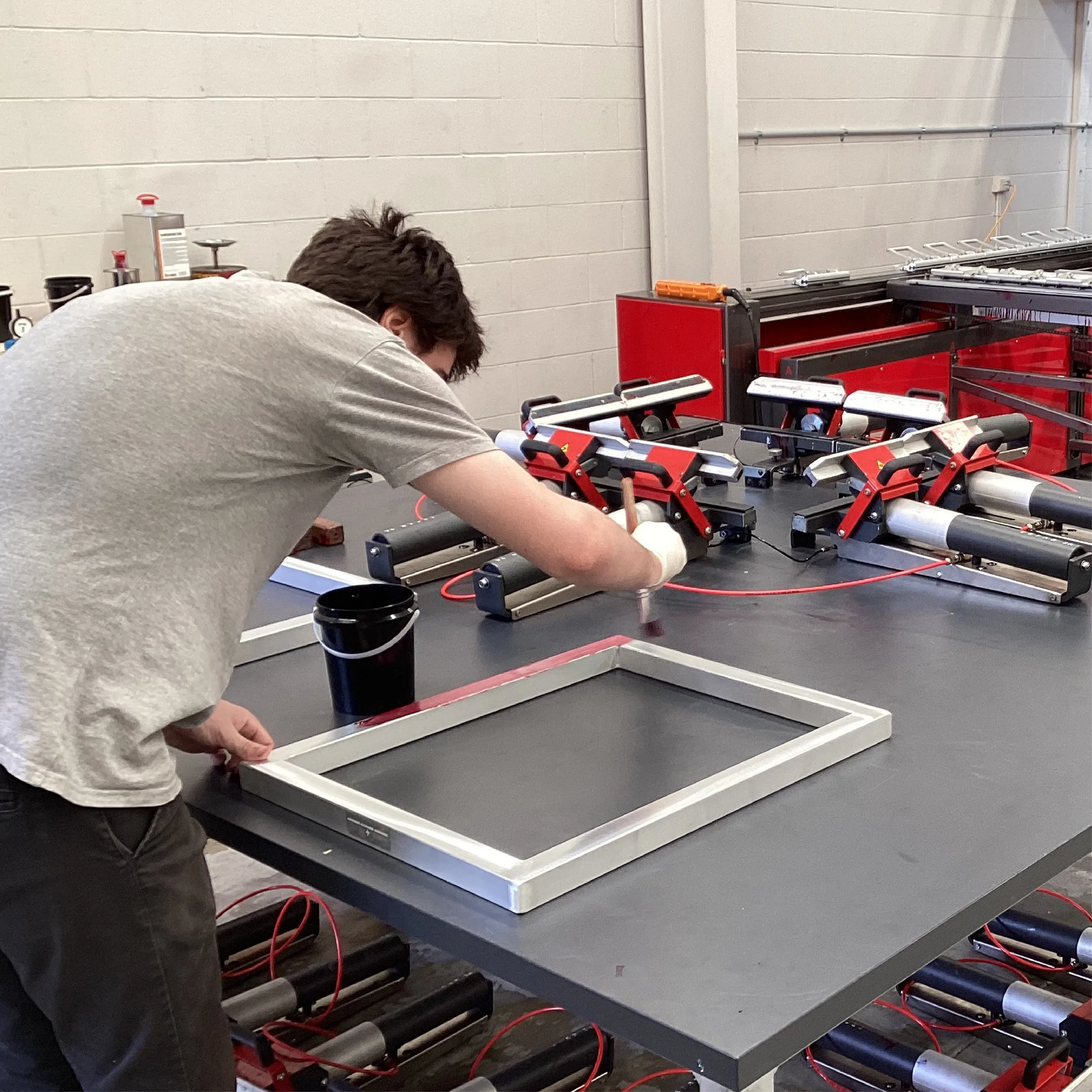
What automation changes: pneumatic stretchers give every screen the same tension, every time. No stretcher? We build, re-mesh and refurbish screens in-house.
The kit: Grünig G-Stretch pneumatic stretchers, Sefar screen printing mesh.
2. Coating
The problem: a thicker coat means a thicker ink deposit, and a different colour on the garment.
What automation changes: an automatic coater lays emulsion to the same thickness on every screen.
The kit: Grünig G-Coat automatic coaters.
3. Imaging
The problem: film positives get scratched, lost and misregistered.
What automation changes: computer-to-screen (CTS) imaging puts the artwork straight onto the screen from the file. No film at all.
The kit: KIWO LX and XTS, Grünig STM.
4. Exposure and washout
The problem: under- or over-exposed stencils break down on press.
What automation changes: LED exposure with a vacuum blanket gives sharper, more consistent stencils in less time.
The kit: KIWO and ATMA exposure units. For the difference between washout and reclaiming, see our simple guide to screen cleaning.
5. Printing
The problem: the wrong press for the work.
What automation changes: automatic carousels for garments; flatbeds for panels, decals and membrane switches.
The kit: Adelco Cyclone and Matrix, KIWO carousels, ATMA flatbeds.
6. Curing and ink mixing
The problem: a perfect print can still fail in the dryer, and a reorder rarely matches the first run.
What automation changes: a conveyor dryer cures the whole ink film; automatic mixers weigh colour to a stored formula.
The kit: Adelco dryers, Adelco and ATMA ink mixers.
7. Washing and reclaiming
The problem: the job nobody wants. It's wet, repetitive and chemical-heavy, and easy to rush at the end of a shift.
What automation changes: the Lotus EVO Compact cleans, degreases, strips, rinses and dries every screen automatically, handling 200–240 screens in an eight-hour shift.
The kit: Lotus Holland EVO Compact, with screen chemicals matched to the machine.
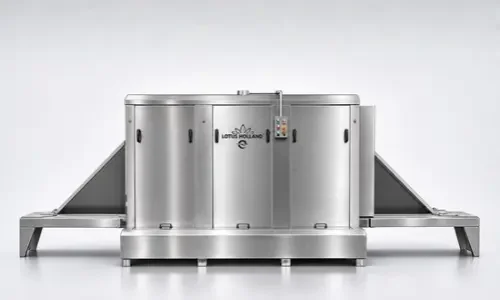
Out of the washout booth
The Lotus Holland EVO Compact reclaims every screen the same way, from ink to bare mesh, with no one at the pressure gun.
Which stage should you automate first?
Start with the stage that costs you most, not the one with the most impressive machine. Ask five questions:
Where do the hours go? Track a normal week, including the time screens spend waiting.
Where does variation start? If prints change from screen to screen, look upstream at tension, coating and exposure.
Where's the bottleneck? If the press waits for screens, the problem is in the screen room.
Where's the safety risk? Chemical handling, wet floors and repetitive strain usually cluster in one place. Safe Work Australia's code of practice on hazardous chemicals sets out what's expected.
Which job is hardest to staff? The job nobody wants is the one most likely to be rushed.
If the answers point to labour, safety or staffing, start with reclaiming. If they point to quality, start with coating. Already sorted both? Computer-to-screen imaging is usually next.
What automation won't fix
A machine repeats a process; it doesn't correct one.
Before you automate:
Settle the process. Use the right mesh, emulsion and chemistry for your inks, with tested exposure times.
Match the chemistry to the machine. Automated reclaiming depends on cleaners and removers designed for it.
Train more than one person. A machine only one person understands becomes the new bottleneck.
Five site checks before you buy
Floor and flow. Can screens move in one direction without crossing back through the shop?
Water, drainage and power. Reclaiming systems need all three. Check your local trade waste rules for rinse water.
Ventilation and chemical storage. Plan where chemicals live and how fumes are extracted.
Lead time and installation. Ask how long it takes to arrive, and how much production time you'll lose while it goes in.
Training and support. Ask who trains your team, how fast a technician responds, and where parts are held.
One supplier for the whole screen room
Kissel+Wolf supplies every stage, from mesh and coaters to presses, dryers, mixers and Lotus Holland reclaiming systems, plus the screen chemistry that runs through all of it. Our local technical team installs, trains and supports.
Not sure where to start? Book a screen room walk-through below, or browse the complete screen room range. We'll look at where the hours and the rework go, and tell you honestly which stage would make the biggest difference first.
Frequently Asked Questions
Do I need to automate the whole screen room at once?
No. Most shops start with one machine and add the next as volume grows, so the first one pays its way before you plan the second.
Is screen room automation only for large shops?
No. What matters is how many screens you prepare each week, not the size of the business. A mid-sized shop reclaiming by hand every day can gain more from one automated system than a large shop that already runs smoothly.